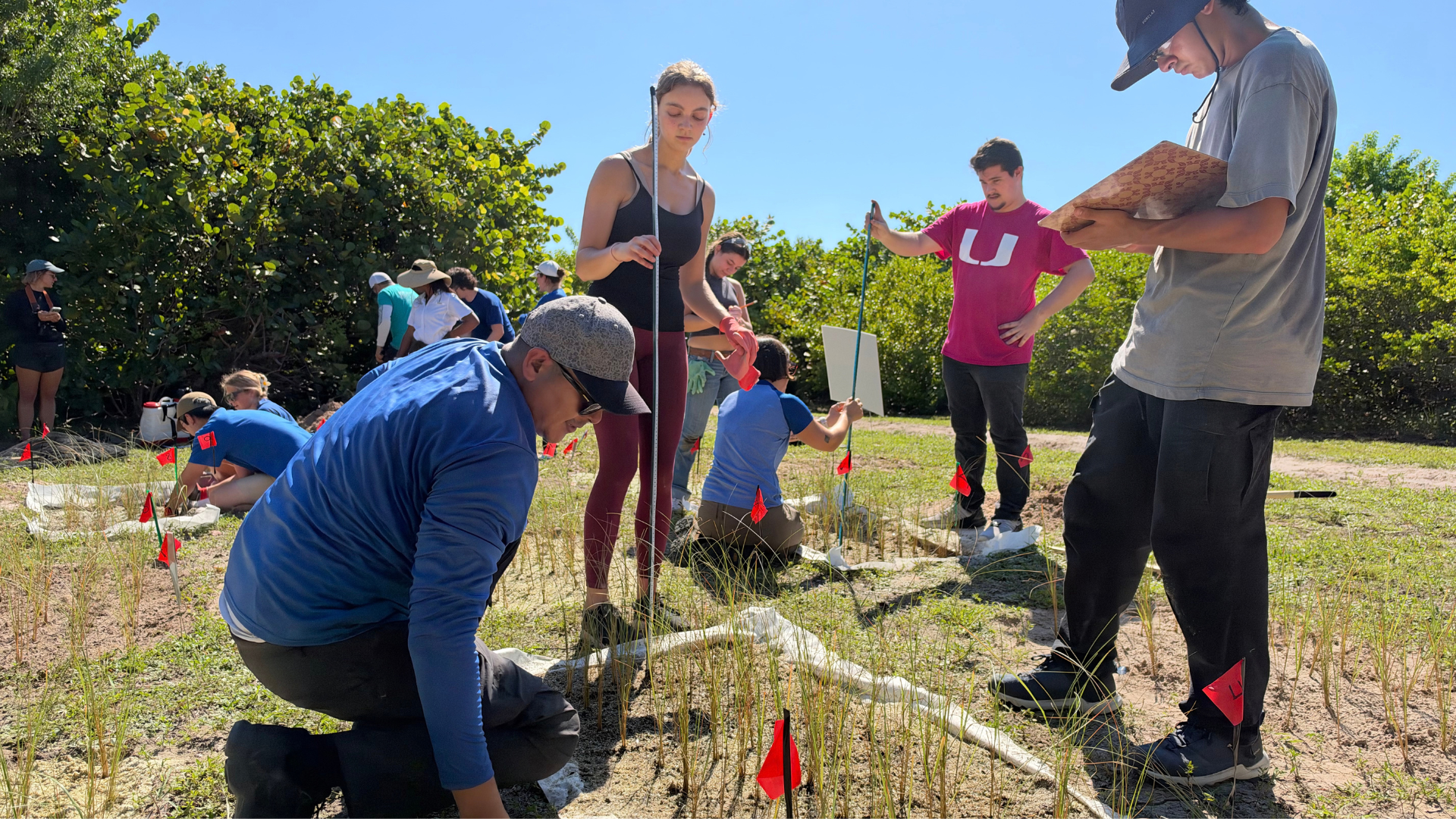
Miami-Dade County is at the forefront of two major crises: waste and coastal erosion. Millions of tons of waste are generated in our county annually, going into landfills or being shipped out of state. At the same time, we face constant pressure of rising sea levels and storm surge threatening homes and businesses, which is especially clear right now as King Tides flood our streets.
Coastal dunes and beaches are our first line of defense, and every year we restore them through expensive and ecologically costly sand renourishment. What if we could address both challenges at once, turning part of our waste stream into a resource for coastal restoration?
That is the question behind our glass sand study.
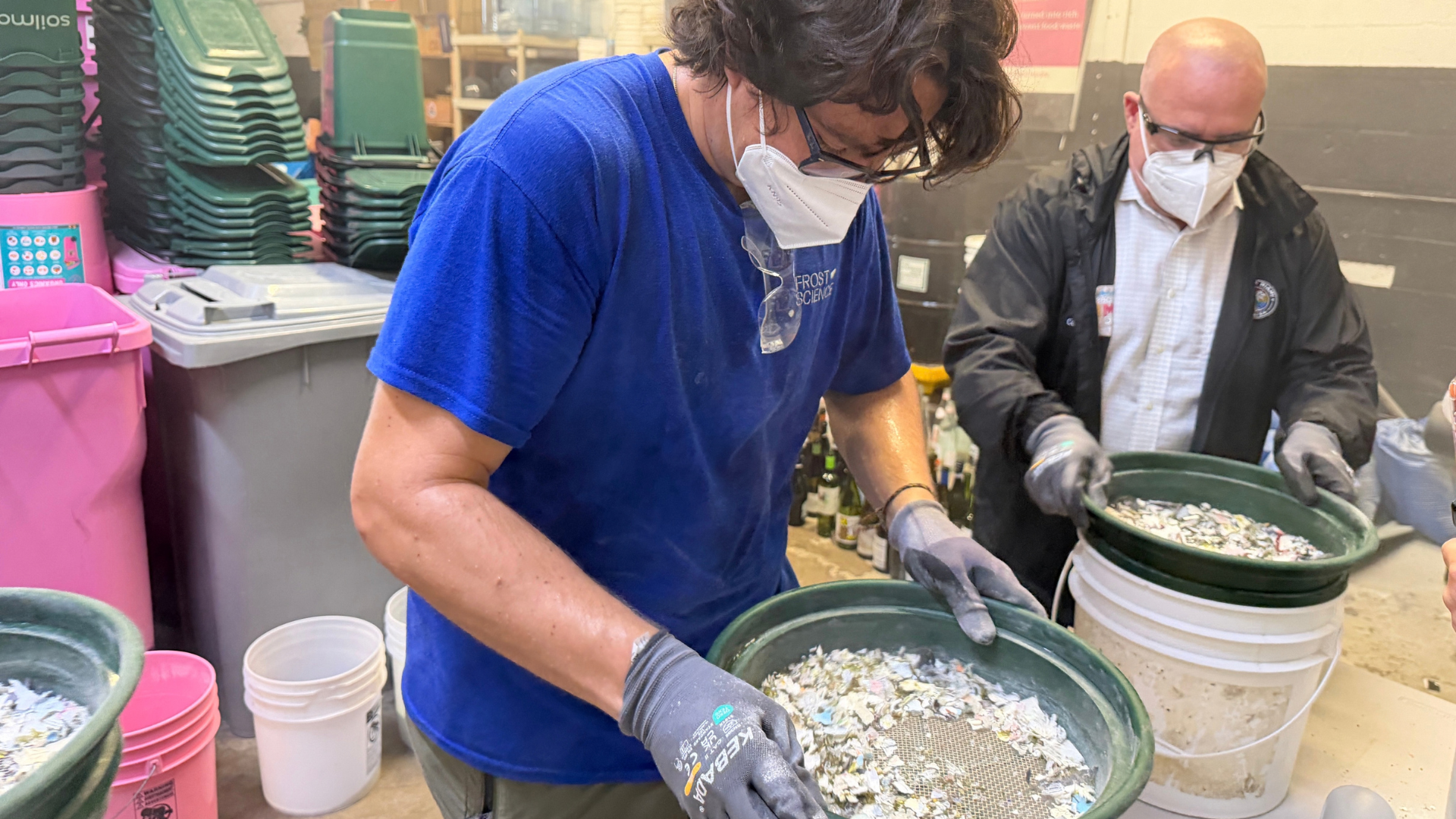
Recycled glass bottles are sorted for the correct colors, grinded, and sifted into the correct sizes for the glass sand study.
On Sunday, September 27, we launched the second phase of our glass sand study at Historic Virginia Key Beach Park, testing whether compost and sand made from recycled glass can be a tool to restore dunes. The first phase of the study, completed in containers on the roof of the museum earlier in the year, showed us that recycled glass can support plant growth comparably to beach sand, but most exciting was the potential we found for compost to increase the survival and growth of critical dune species. Moving the study into the field will give us more concrete data that will show us if this is worth pursuing on a larger scale.
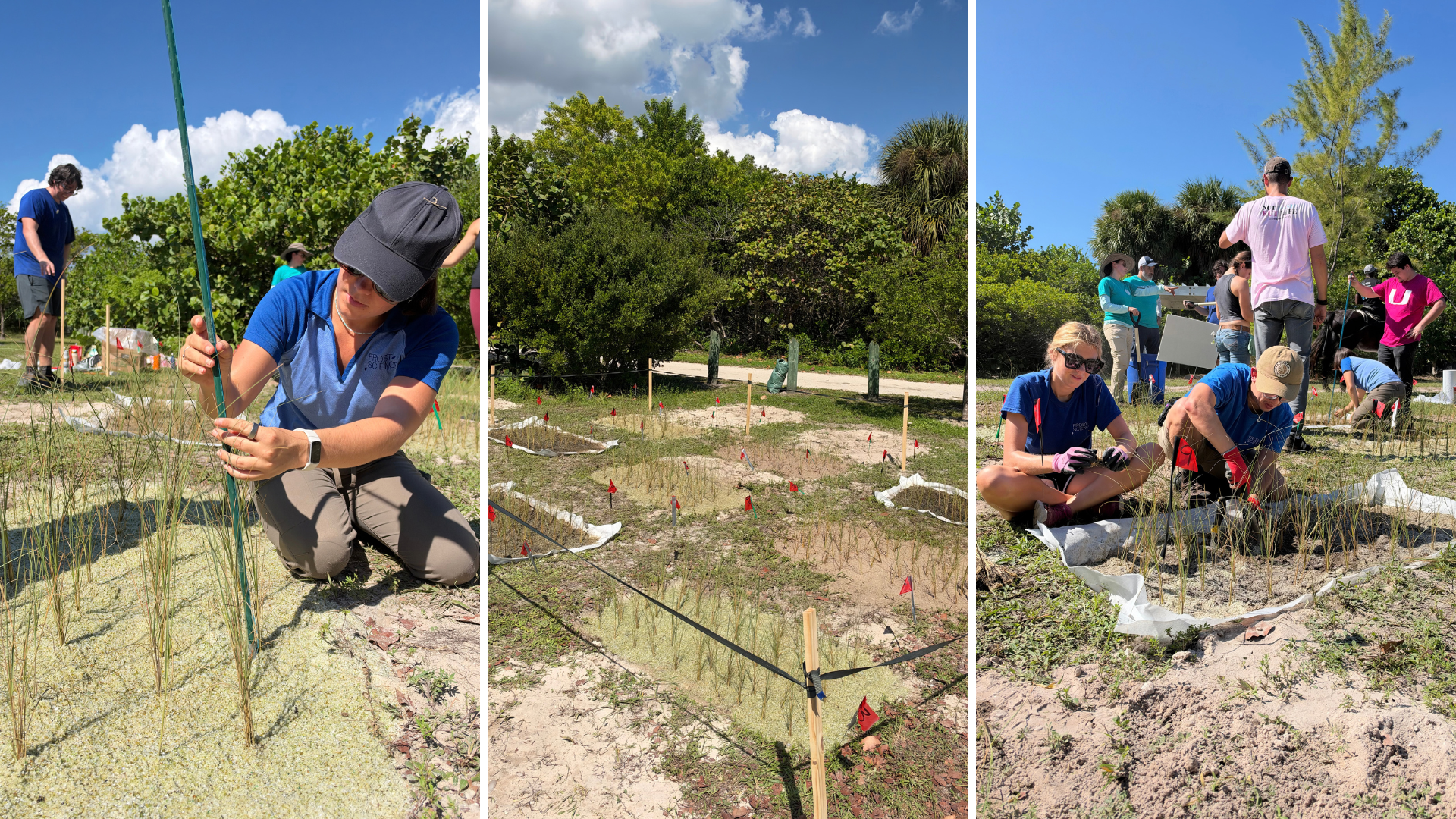
Researchers will monitor 450 sea oats over four months to understand how recycled glass and compost perform under real coastal conditions.
This research is a collaborative effort led by Frost Science’s MUVE program with Glass for Life, Compost for Life, students from the University of Miami, and sponsorship from City of Miami District 2 Commissioner Damian Pardo. If successful, this study’s findings could become a model for coastal communities and prove that Miami can close the loop between what we discard and what we need to protect.