I’m Dr. Cary Woodruff, Curator of Vertebrate Paleontology at Frost Science. Take a step into my office with this monthly blog series, and let’s dig deeper.
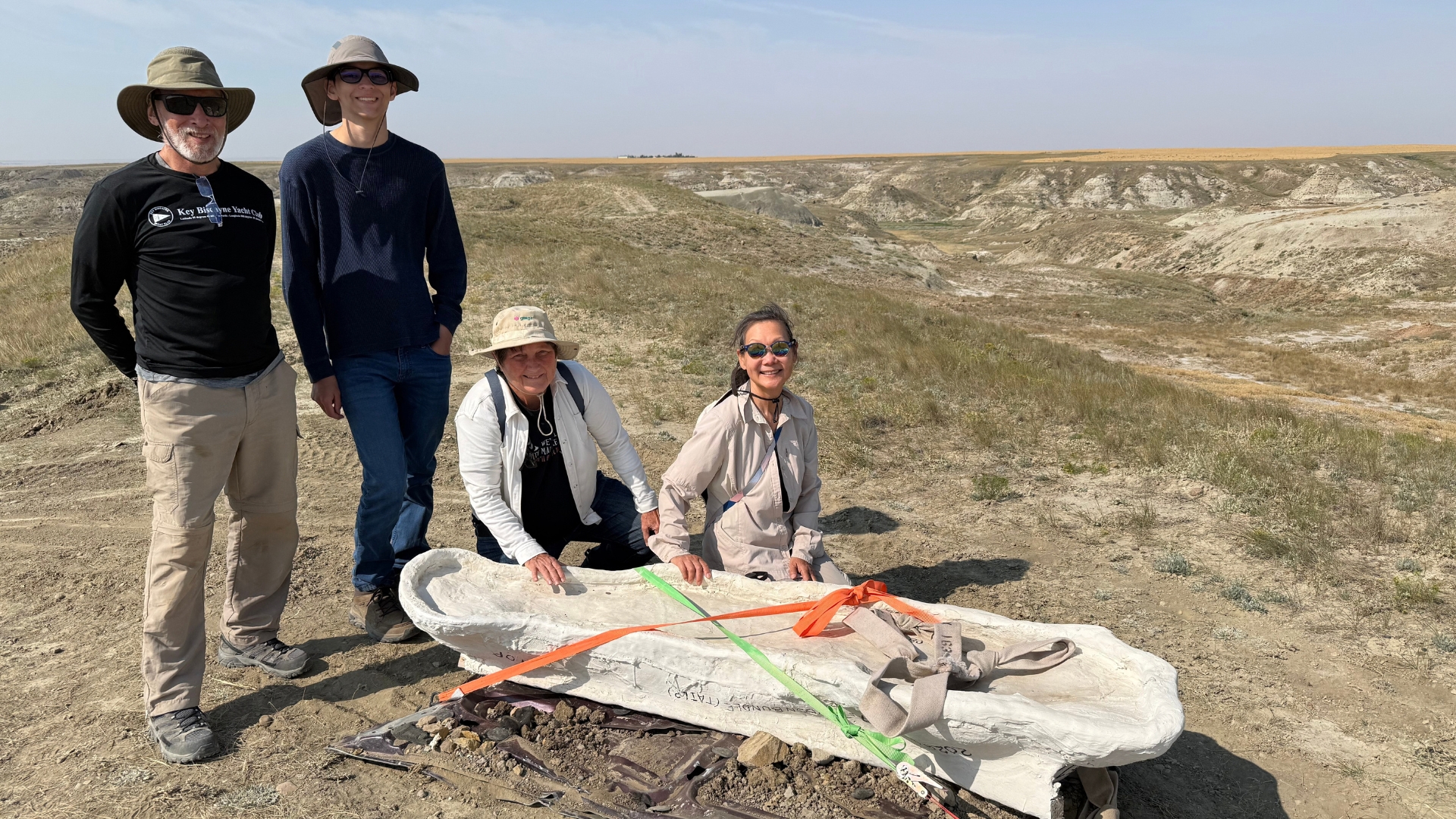
Our 2026 summer season in Montana has come to an end. I missed air conditioning and a comfy bed very much. Dust storms, snow storms, camp getting destroyed twice by rainstorms, and scorching weeks with days over 110°F were just some of the natural obstacles thrown our way. As eventful as the summer was, it was a smashing success. We discovered much of the ankylosaur: several vertebrae (the ‘back bones’), parts of the armor (called osteoderms), beautiful and complete hips, and a portion of the tail. During two week-long intervals, we had great groups of Digging Expedition participants work alongside us to make these discoveries. Digging Expeditions is a new program we’re excited to launch at Frost Science. We don’t just want folks coming to see our museum, we also want you out with us doing science.
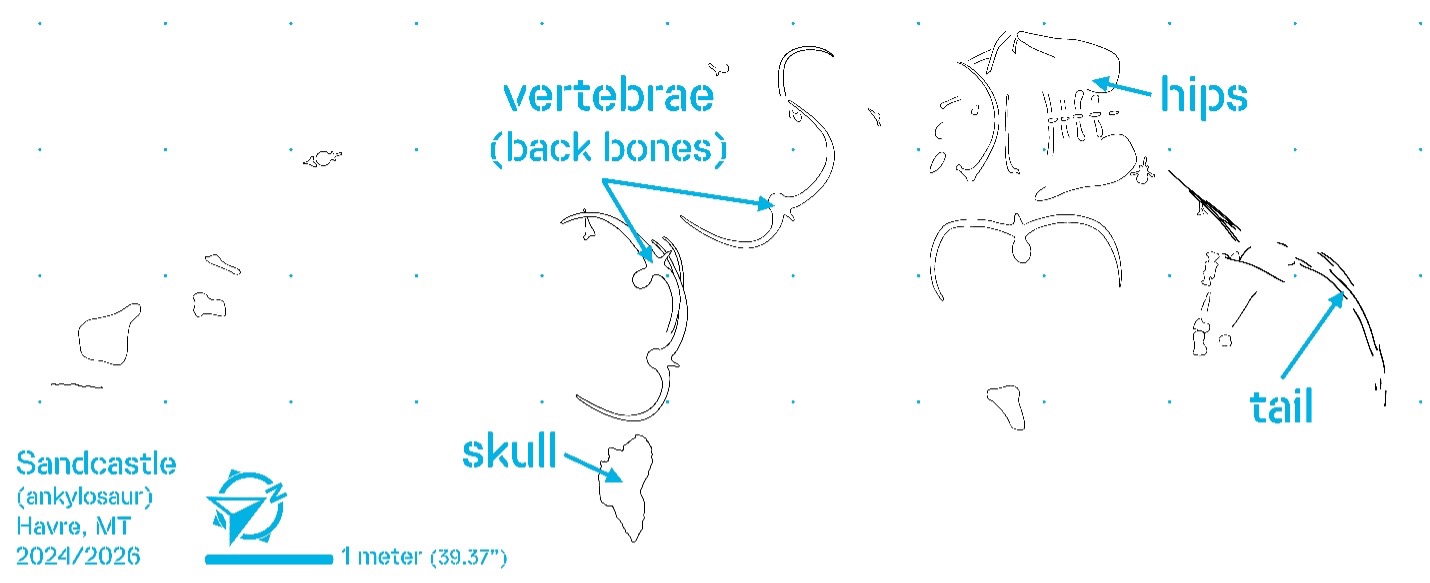
Quarry map of the “Sandcastle” site.
From what we had discovered, a good portion of our ankylosaur’s skeleton is represented, and it seems to be roughly in life position: we have the head, part of the back, followed by the hips, and then part of the tail. But many parts are still missing, including the neck, shoulders, arms, legs, hands, feet, the rest of the back, and, despite finding part of the tail, the tail club.
In late August, the crew started finding new bones on the far left side of the quarry, like pieces of armor, an ulna (one of the bones in the forearm), and a tail vertebra. This potentially indicates that other bones from various regions of the skeleton might have been washed away and deposited in front of the main portion of the body.
Will we find these missing bones as we start excavating the far left side of the quarry? What will it mean if we find some of the missing bones, but not others? What if those bones weren’t even present when the rest of the skeleton was buried?
These are all great questions!
And there’s only one way to answer them all: we have to dig! We want you to help us find out how much more of our ankylosaur there may be.
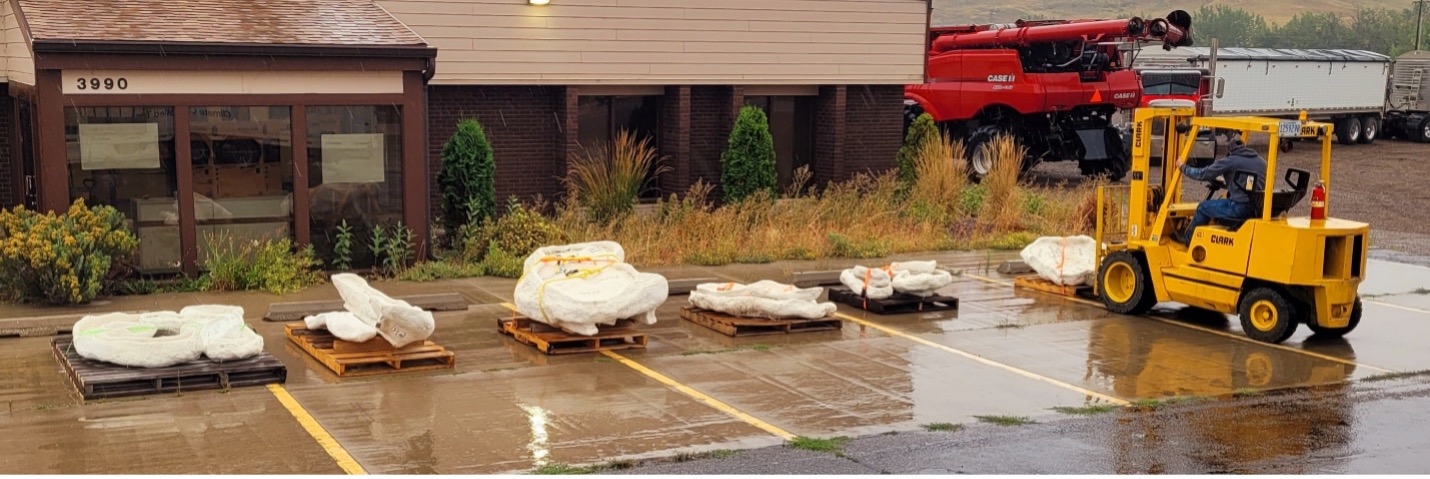
These large fossil jackets (the protective layers of hardened burlap and plaster surrounding the fossils inside) are being prepared for loading and beginning their journey to Miami, Florida. A huge thank you to the Bureau of Land Management’s Havre Field Office, whose amazing team members help us store and move fossils each year and are always eager to lend a hand.