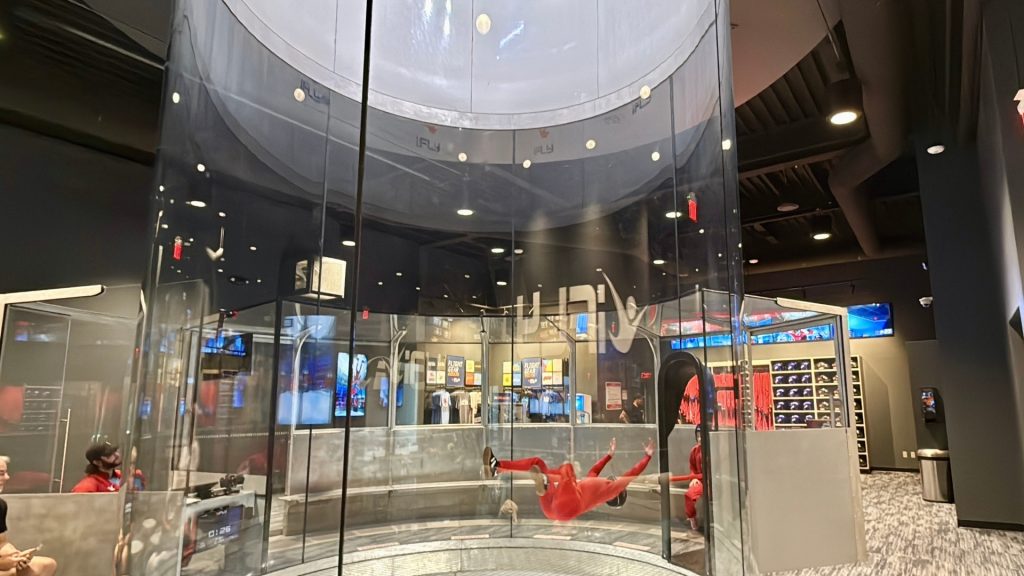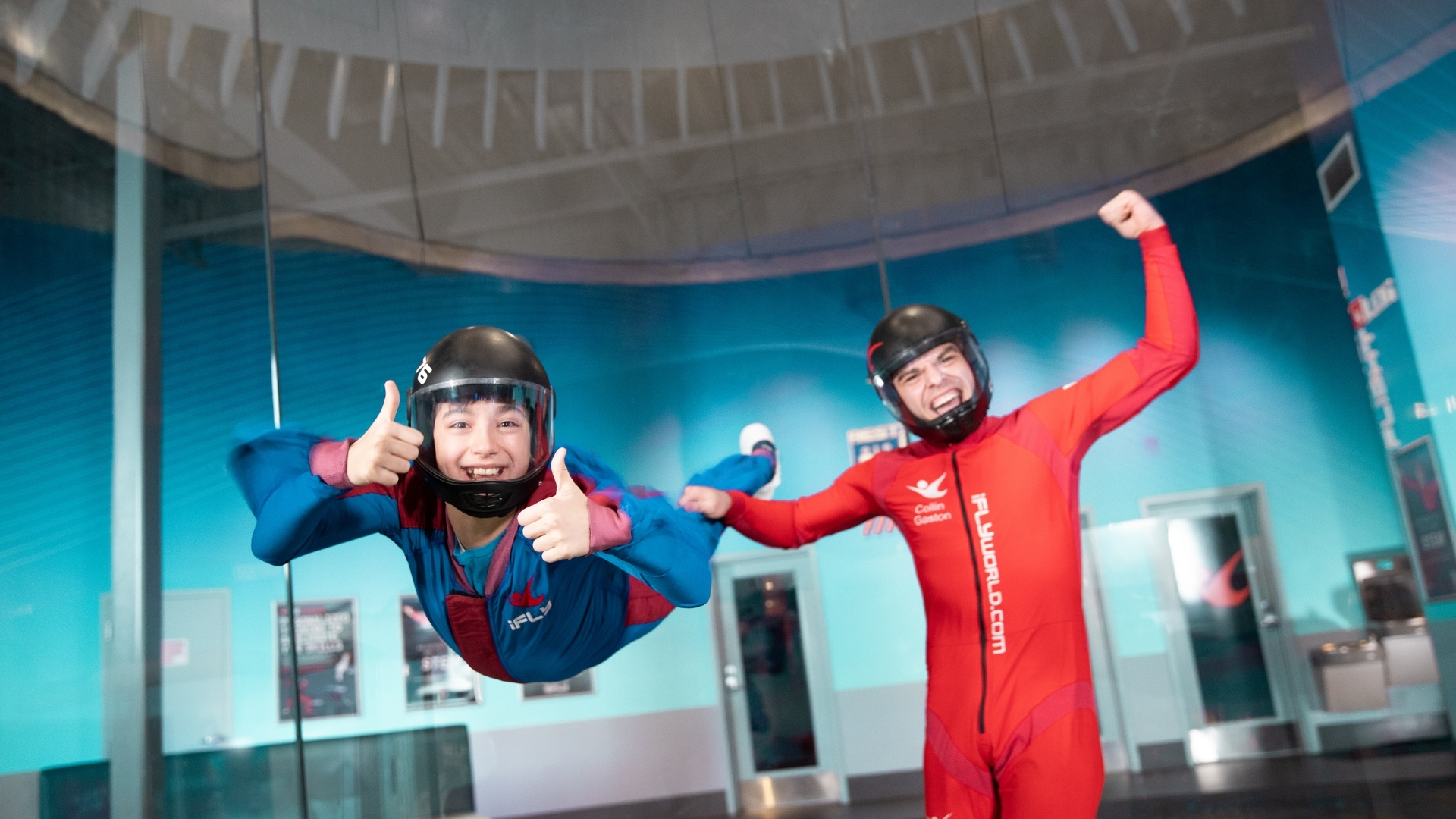
What does it take to fly without ever jumping out of an airplane? At iFLY Miami, the answer comes down to physics.
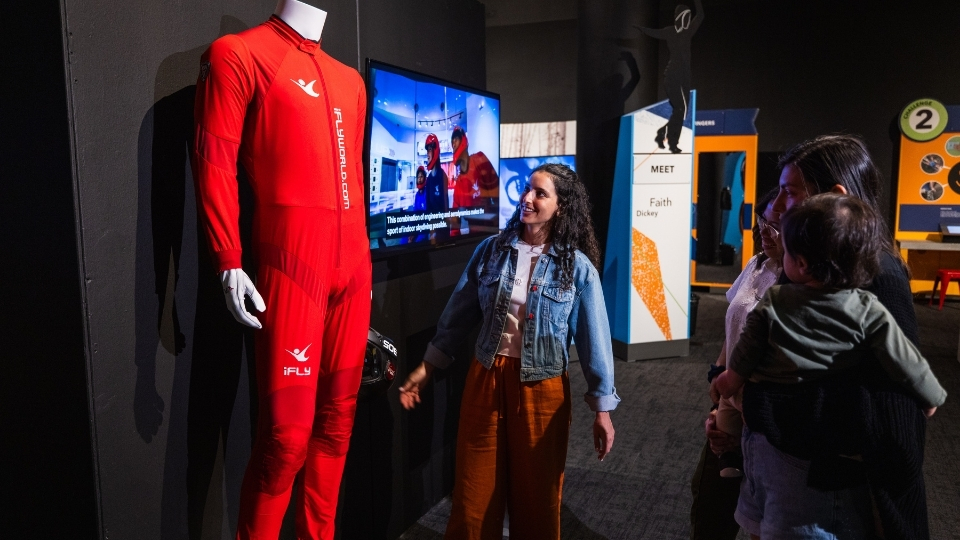
As the generous sponsor of Extreme Sports: Beyond Human Limits at Frost Science, iFLY Miami offers a real-world connection to the science explored throughout the exhibition. Indoor skydiving brings together physics, engineering and human skill to create the exhilarating sensation of freefall—all inside a vertical wind tunnel.
The Physics of Flight
When a skydiver falls through the atmosphere, gravity pulls their body toward Earth while air resistance, or drag, pushes in the opposite direction. As the skydiver accelerates, drag increases. Eventually, the upward force of drag can balance the downward force of gravity. At that point, acceleration stops and the skydiver reaches terminal velocity (the top speed an object reaches when falling through the air).
Indoor skydiving uses those same principles in a different way. Rather than a person falling through relatively still air, a vertical wind tunnel circulates air upward at speeds high enough to keep a person floating.
Body position matters, too. Changing the shape and orientation of your body affects how you interact with the moving air—and therefore your stability and movement. Even small adjustments can make a difference, turning a flight into a hands-on lesson in force, motion and aerodynamics.
For older students, that can include using measurements and mathematical reasoning to predict terminal velocity and comparing their calculations with actual wind tunnel results. It’s a powerful way to turn an abstract physics lesson into something students can see — and feel — in action.
iFLY also offers experiences beyond traditional field trips, including STEM Family Sundays, programs for Scouts, youth flight opportunities and All Abilities Nights designed to make the experience accessible to participants with a range of physical and cognitive abilities.
Putting the Physics to the Test
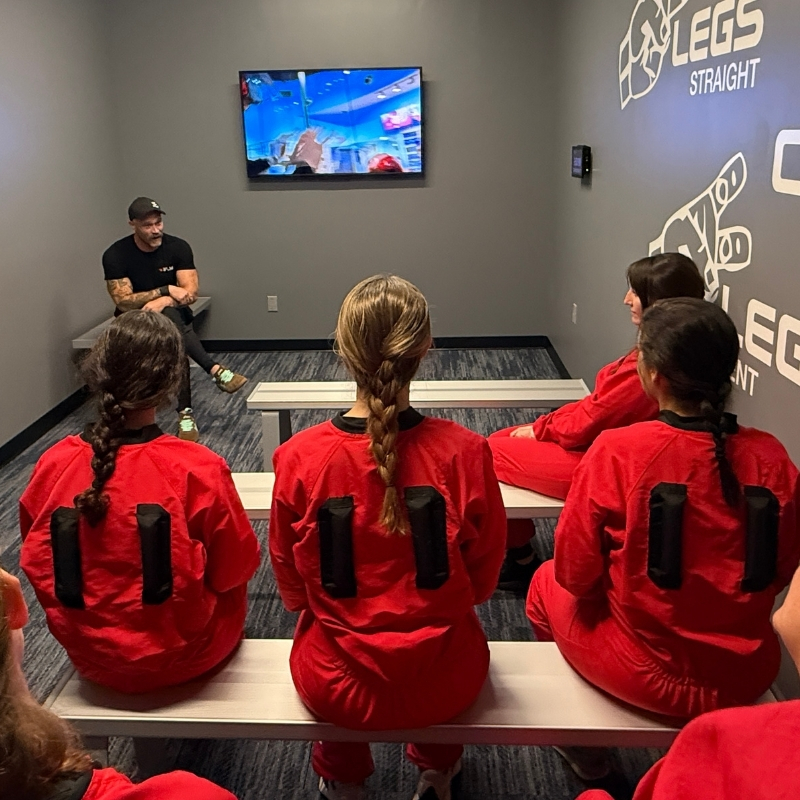
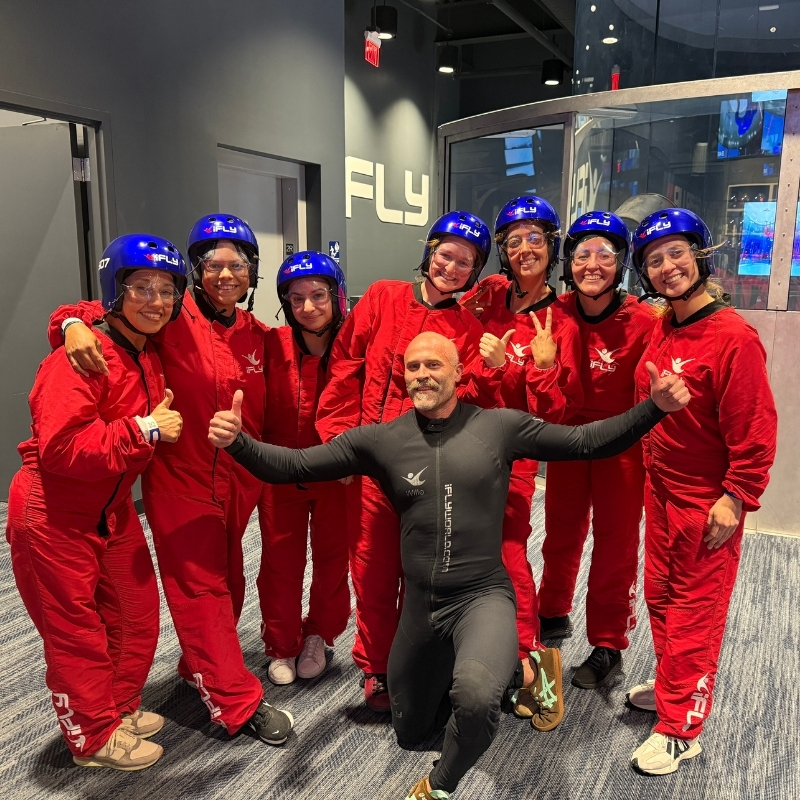
Recently, members of the Frost Science team headed to iFLY Miami to experience that science firsthand. After an introduction to indoor skydiving, we suited up in our flight gear and completed pre-flight training, learning the proper body position and hand signals we’d use to communicate with our instructors inside the wind tunnel.
Then, it was time to fly.
One by one, we entered the tunnel with an instructor and felt the forces we’d been talking about take over. With air rushing upward around us, maintaining the right body position was key to staying stable—and small adjustments quickly demonstrated just how responsive the body is to changes in airflow. We also took things up a notch with a High Flight, where an instructor guided us higher and faster through the tunnel. The rush of moving upward through the chamber was easily one of the most exhilarating parts of the experience. But for our team, there was still more to explore. After flying, the iFLY Miami team took us behind the scenes for a closer look at the fan system that powers the vertical wind tunnel. Seeing the technology responsible for circulating the air gave us another perspective on the engineering required to create a controlled environment where people can fly.
It was a field trip perfectly suited to Frost Science: part adrenaline rush, part physics lesson and an opportunity to see science and engineering at work beyond the museum.
Where STEM Takes Flight
iFLY also turns its wind tunnel into a hands-on learning environment through STEM and PE Field Trips, where students can explore concepts such as gravity, drag, air pressure and terminal velocity through interactive lessons, experiments and demonstrations before experiencing indoor flight themselves. Programs are available for a range of grade levels, with activities tailored to students’ age and abilities.
Additional experiences include STEM Family Sundays, programs for Scouts, youth flight opportunities and All Abilities events designed to make indoor skydiving accessible to participants with a range of physical and cognitive needs.
Take the Adventure Beyond Frost Science
Extreme Sports closes at Frost Science on Monday, September 7, but your exploration of the science behind extreme sports doesn’t have to end there.
After discovering the forces, physics and human capabilities behind incredible feats in the exhibition, put some of that science into action at iFLY Miami. Step into the wind tunnel and experience firsthand how gravity, drag, airflow and body position work together to make indoor flight possible.