I’m Dr. Cary Woodruff, Curator of Vertebrate Paleontology at Frost Science. Take a step into my office with this monthly blog series, and let’s dig deeper.
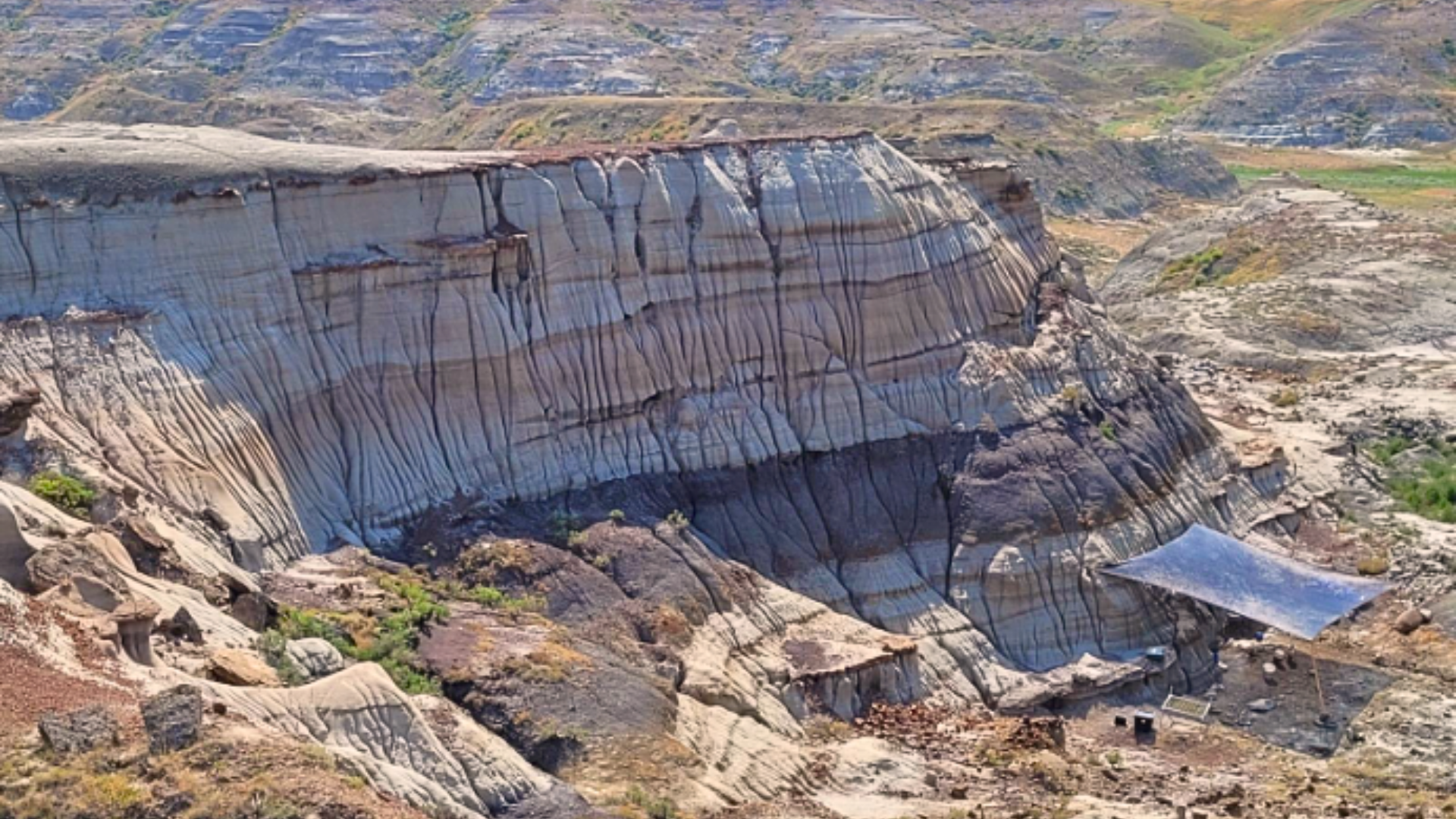
Currently, I’m in far north-central Montana (near the Canadian border) setting up camp for the field season. What does “setting up camp for the field season” entail, you ask? Well, keep reading for a run-down of pre-digging logistics and tasks.
To start, we don’t stay in hotels, motels, Airbnb’s, or cabins—I’ll spend the next four months sleeping in a tent. This is what ‘camp’ looks like when we first show up:
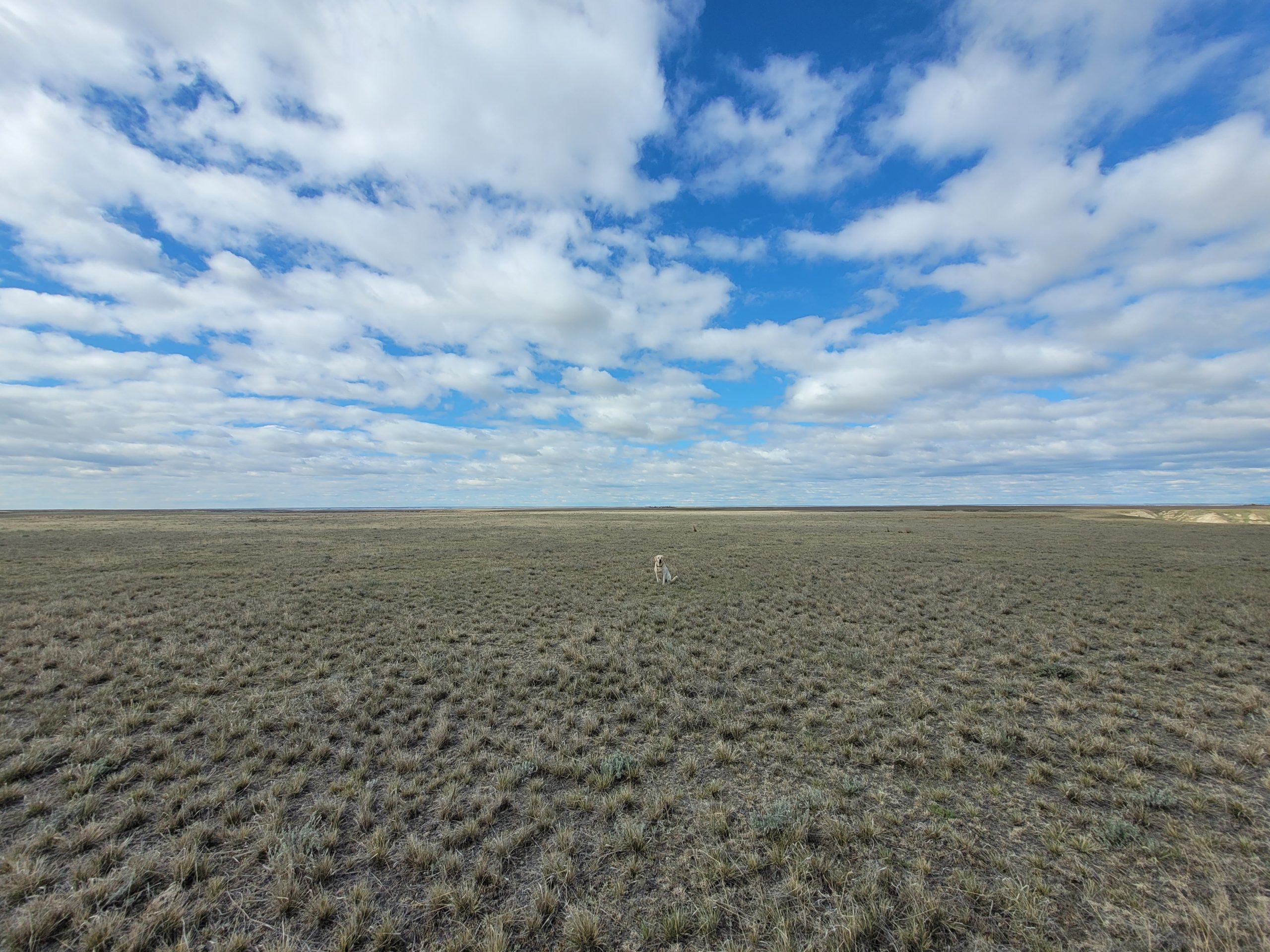
Hunter the Dinosaur Dog for scale.
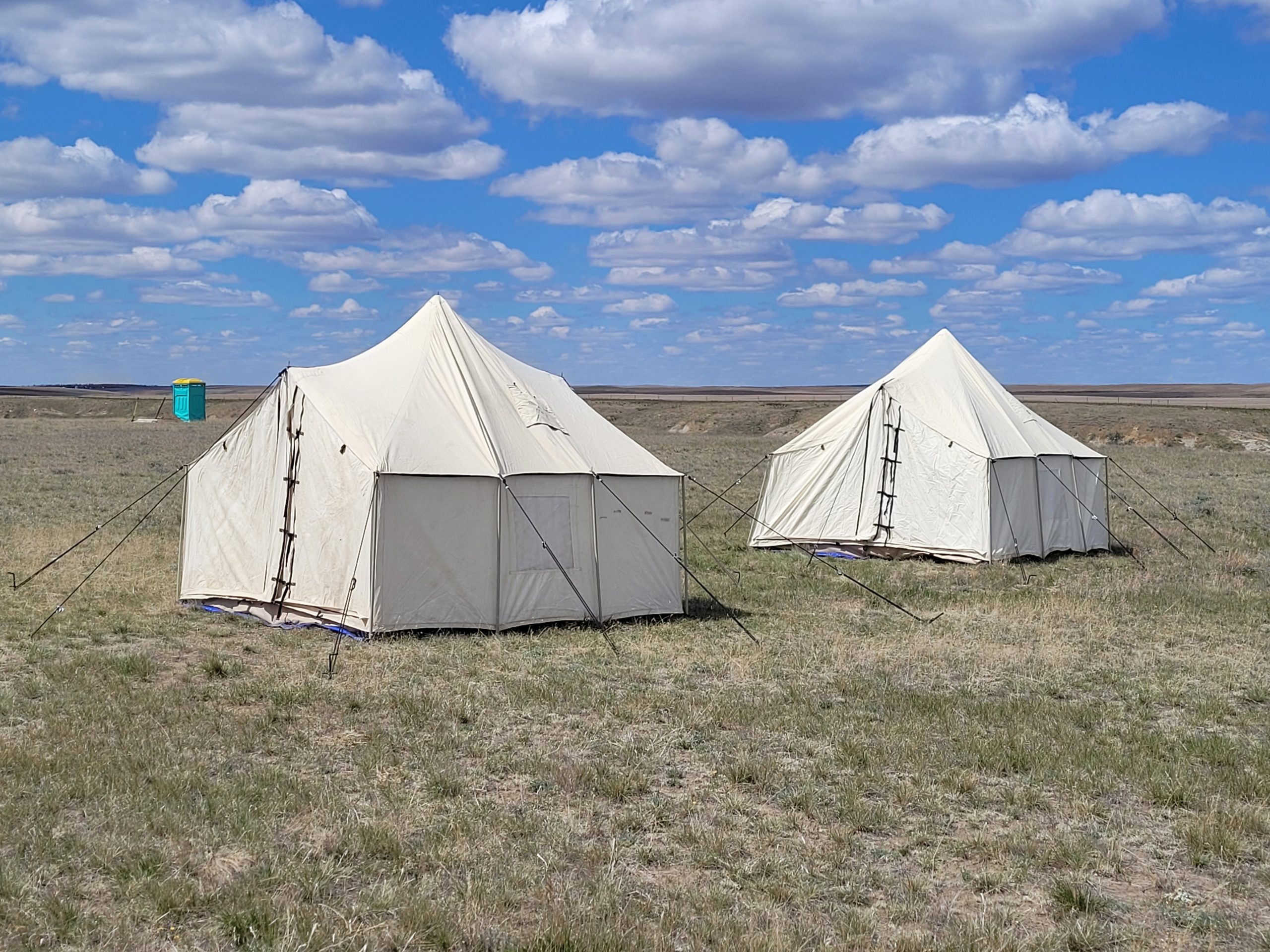
First, I set up two large wall tents. These are large (10 x 10 ft) canvas tents that are made to survive the scorching summers, and the freezing winters. One is our supply tent, and the other is for cooking/food storage.
Next, I set up the canopy where we will rest in a bit of shade at the end of each day digging in the sun (there will be picnic tables under here eventually).
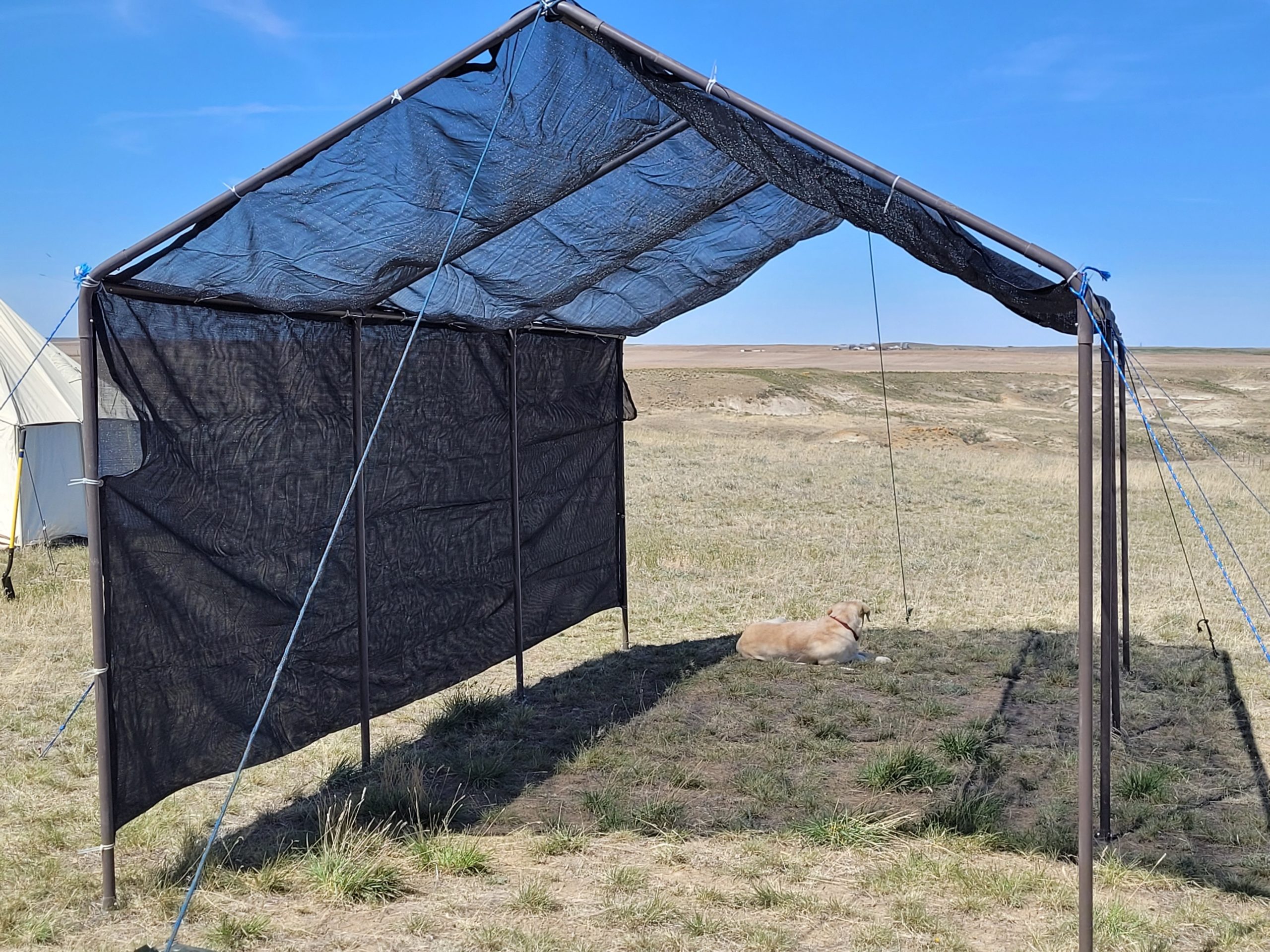
Hunter evaluates and tests the shade canopy.
The weather out West on the prairie is unpredictable at best, and windy days don’t make setting up large pieces of fabric easy. And if it rains, we have to get out of Dodge ASAP. Why? The roads.
Here is an example of one of the good roads to camp:
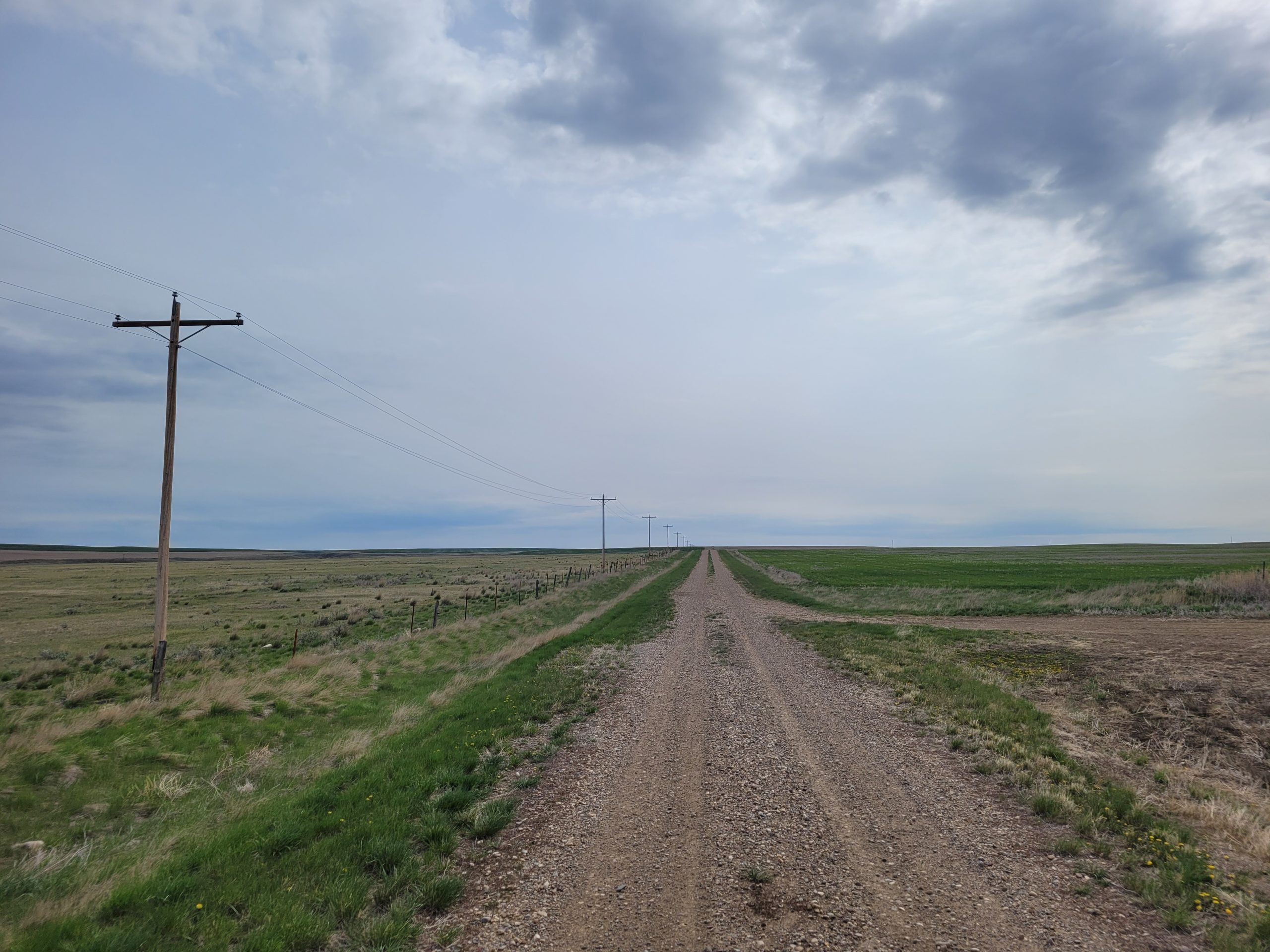
And, here is an example of one of the bad “roads”:
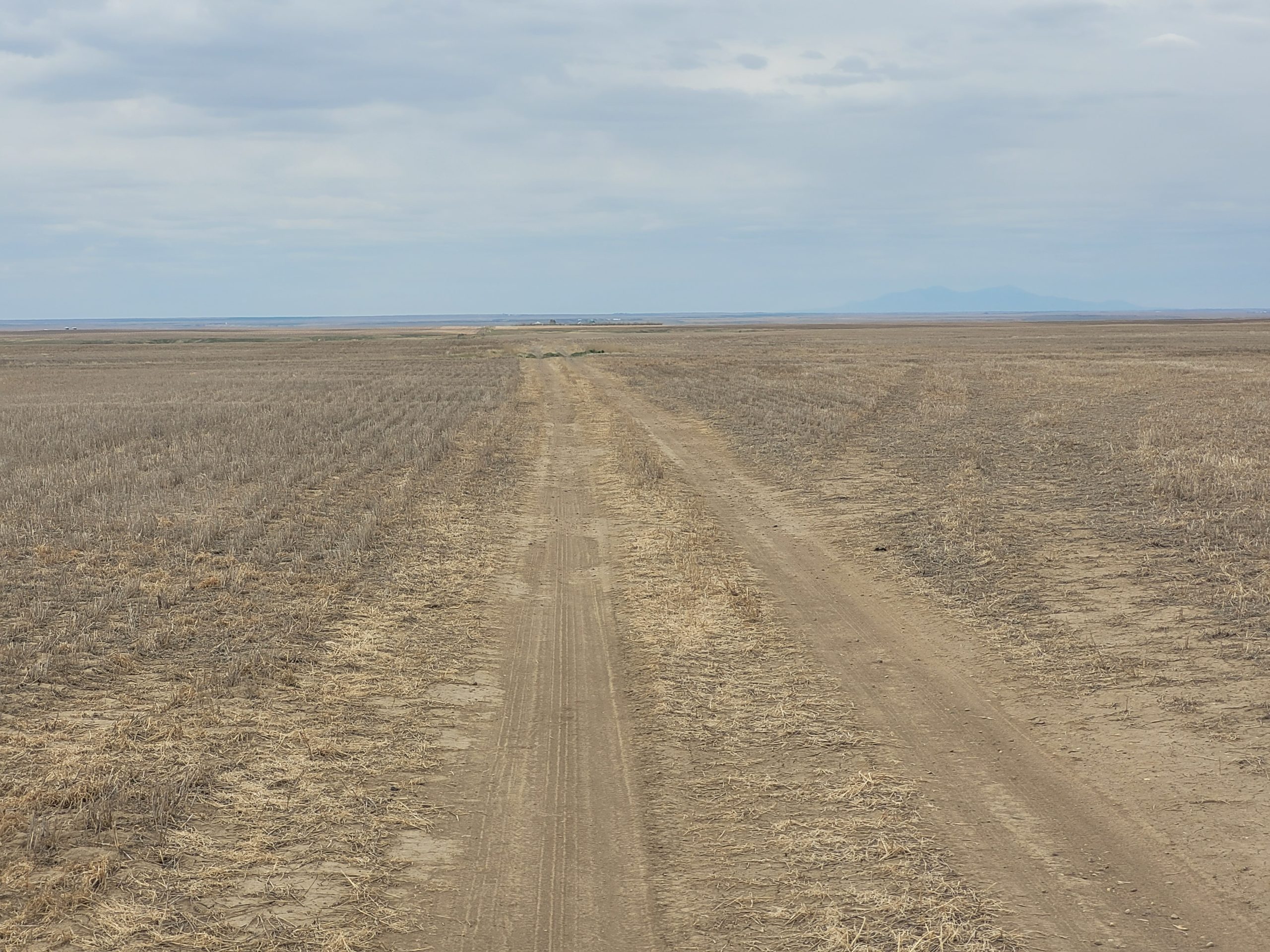
These roads are made from a clay called bentonite. And if you just about spit on it, they become completely impassable. Imagine going down a slip and slide, but in your car. I’ve had to traverse these roads when wet many times, and never once was the truck pointed straight.
But the neighbors are pretty cool.
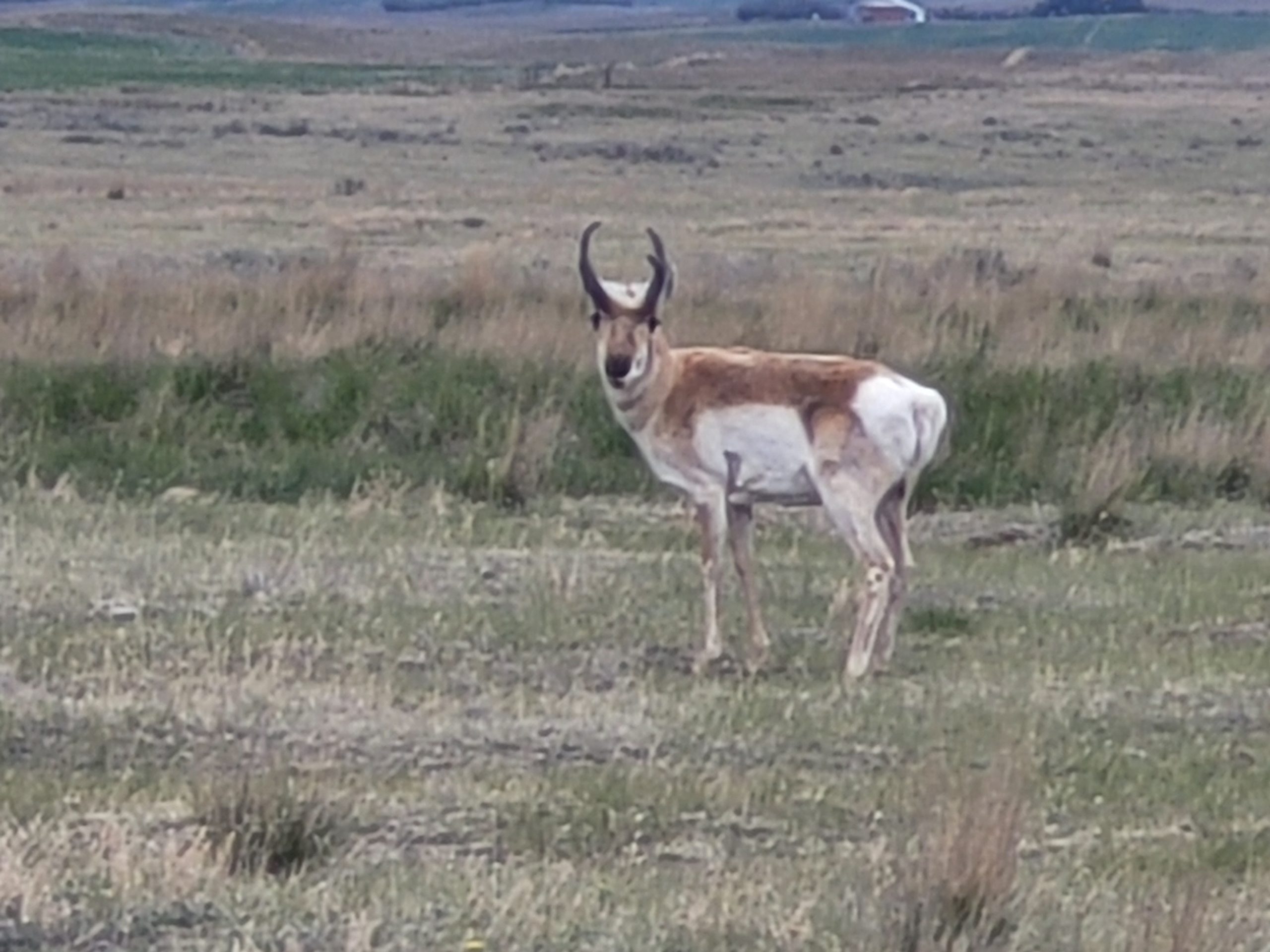
These are pronghorn antelope. And despite their name, they’re not related to antelope that live in Africa. Instead, they’re more closely related to giraffes. In fact, they are the very last living member of their group, and they evolved in North America during the “Ice Age” to out run American cheetahs that used to live here.
And Miami might have iguanas, but out on the Montana prairie, we have horned toads.
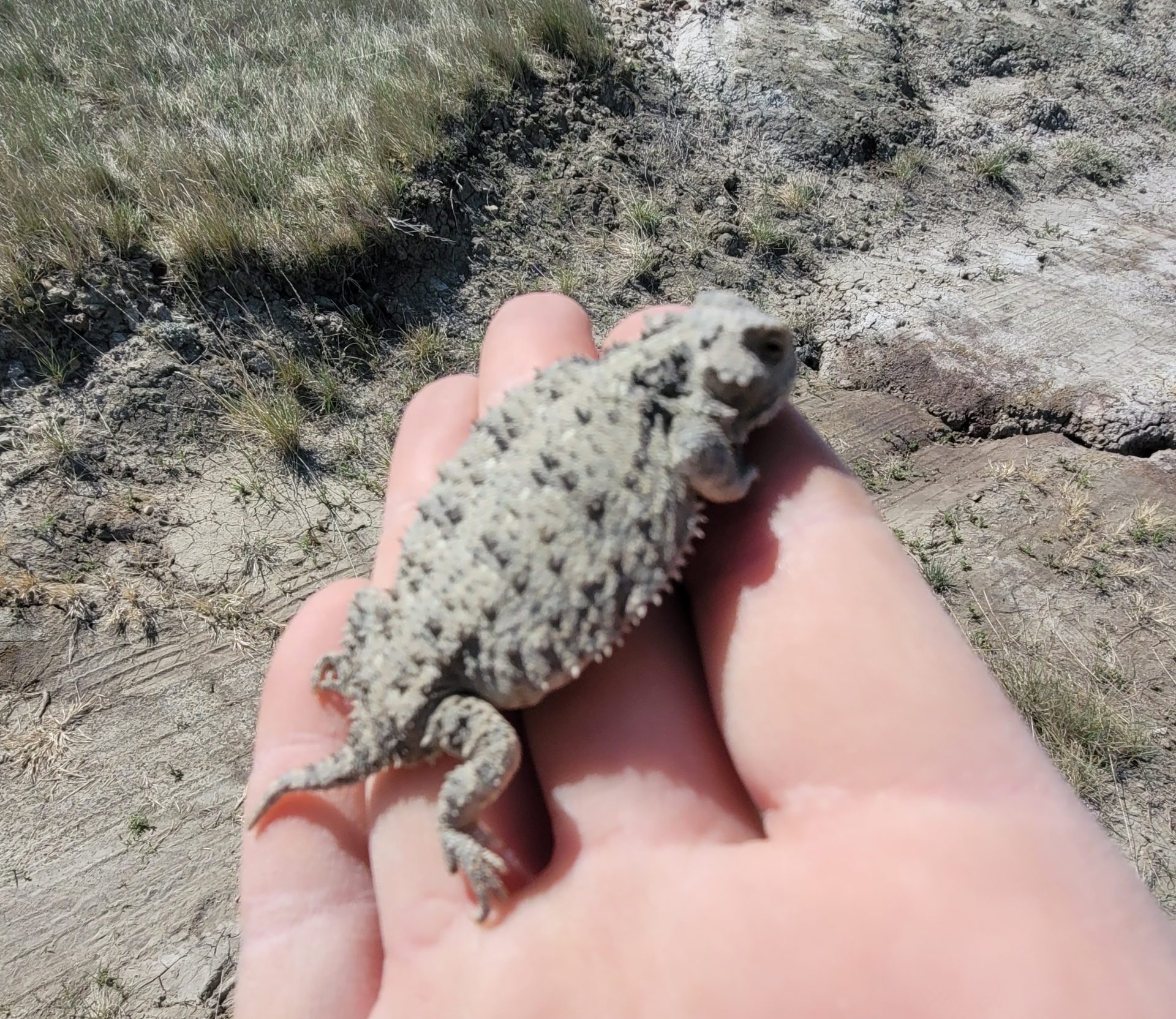
This is a horned toad, but again, don’t let their name fool you: they’re actually a lizard. A lizard that can survive 100°+ summers and -40°+ winters!
After camp is finally set up—and I’ve moved a small mountain’s worth of gear into the tents—What’s next? Relaxing with a cold drink and watching Netflix? HA! Ice? That’s what we put in the cooler to keep our weeks’ worth of food cold. Electricity? Nope. The only power we have comes from a small generator that powers the coffee pot in the morning, and any necessary electrical devices we may need. But, what about water? We have a 200-gallon water tank we fill up in town. That means showers are short and cold, so you better hope it was a hot sunny day.
And I know what y’all all are thinking. What’s the bathroom situation like? I’ll have you know, we have an outhouse! That I found in a junkyard…
But all of this—these hardships and months-long lack of creature comforts—is what it takes to find dinosaurs. And without question, it’s the happiest I am all year.
Now that I’ve talked you into joining us, you can sign up for a Digging Expedition program this summer. Click HERE for all of the information.