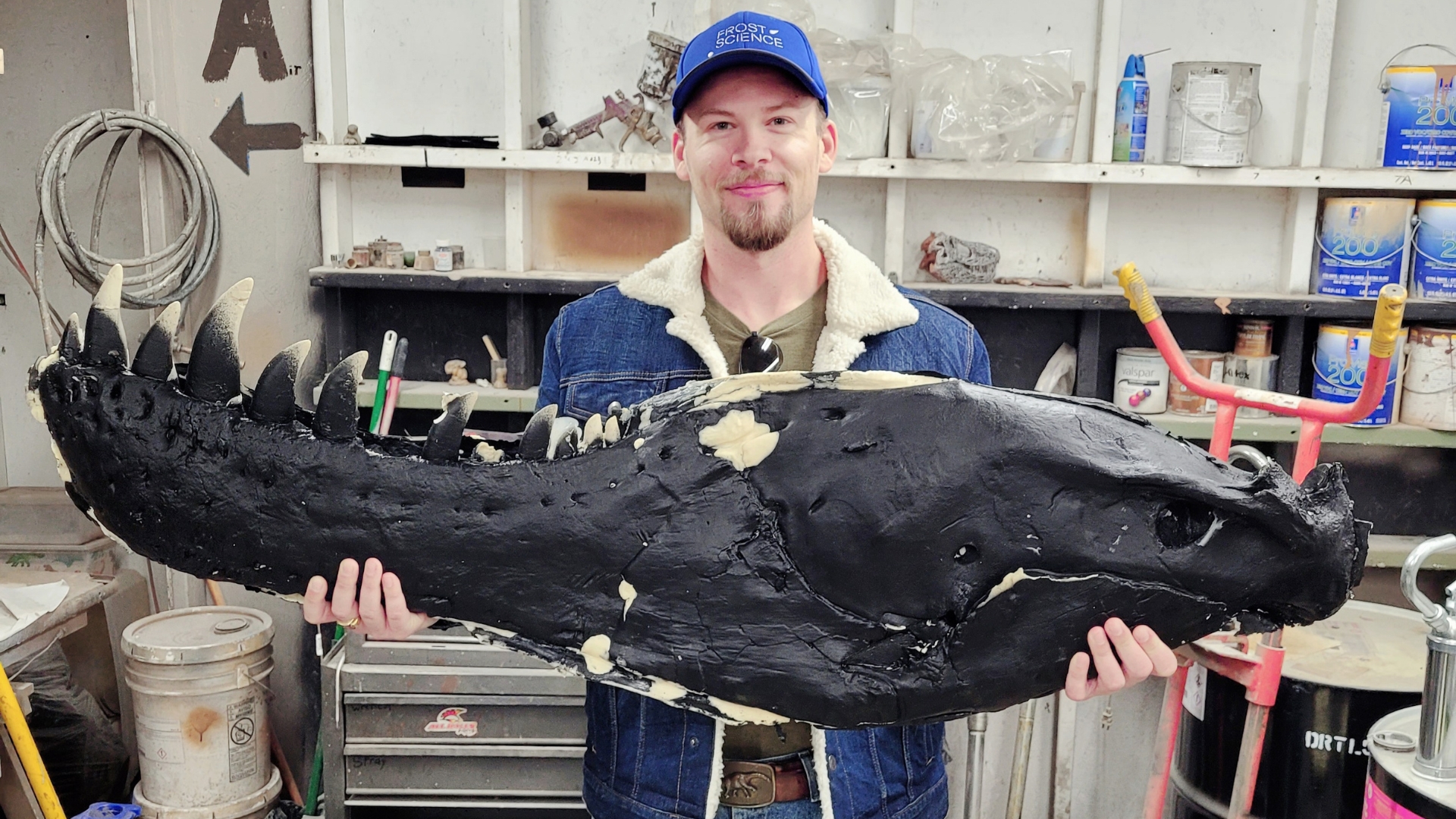
I’m Dr. Cary Woodruff, Curator of Vertebrate Paleontology at Frost Science. Take a step into my office with this monthly blog series and let’s dig deeper.
2025 was a memorable year for paleontology. Not just for incredible new dinosaurs described, but also for many amazing scientific discoveries. Here are just a few of my favorites:
Dinosaurs thrived right ‘til the end.
There’s been a long debate over whether or not the dinosaurs were slowing going extinct prior to the asteroid, or if this main event singularly did them in. New finds in New Mexico reveal a species rich and diverse dinosaur ecosystem thriving literally just before the impact. Coupled with other sites in North America, this research reveals that the dinosaurs might have kept chuggin’ along if space hadn’t of intervened.
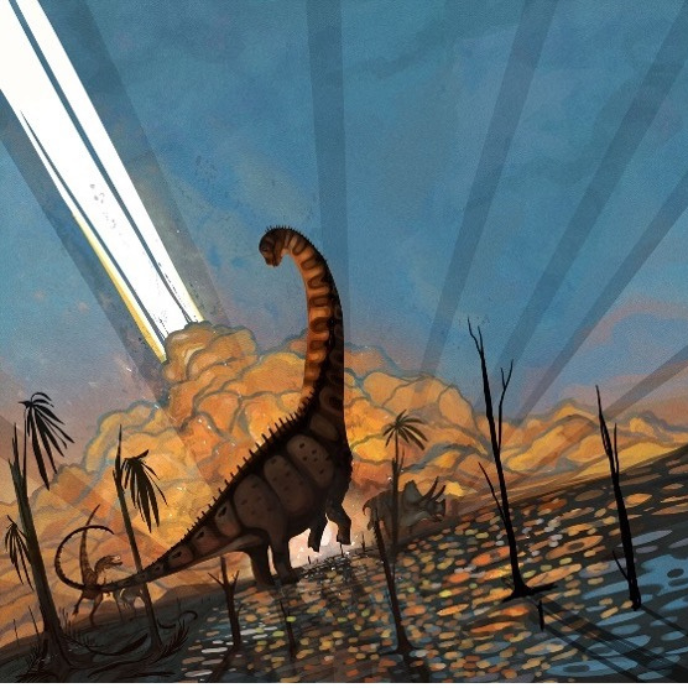
Image credit: N. Jagielska and Flynn et al. (2025)
The Best Dome
Zavacephale (pronounced zah-va-seff-a-lee) is a new and remarkable “dome-headed” dinosaur. This group of dinosaurs is poorly understood (most are known only from incomplete skulls), but Zavacephale preserves a largely complete skeleton, and is the most complete skeleton known from this strange group.
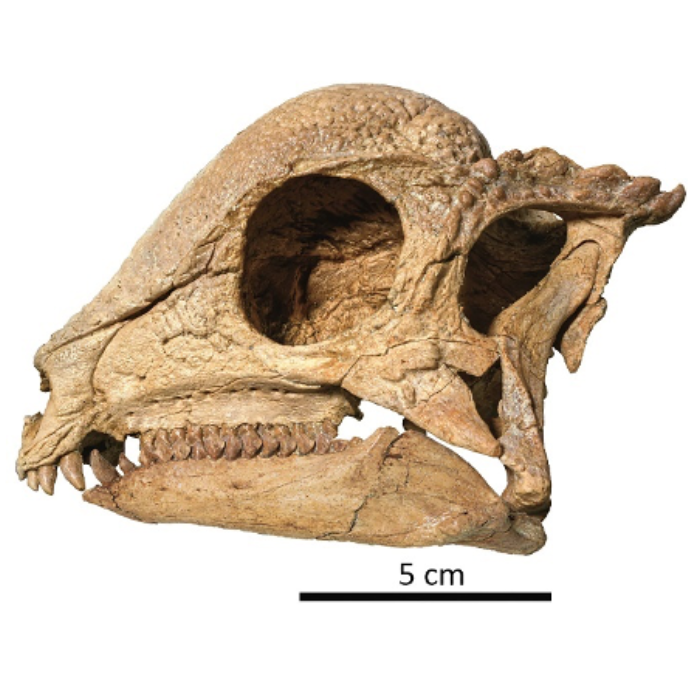
Image credit: North Carolina Museum of Natural Sciences
Long Live the Little King
When Tyrannosaurus rex was stomping around, there may have been another, smaller ‘tyrant’ lurking around—Nanotyrannus. And in the world of paleontology, almost nothing is more controversial than Nanotyrannus. Some thought it was a separate and distinct species. Others, that it was literally just a teenage T. rex. But a new examination on a new and stunning specimen was about 20 years old when it died—and therefore couldn’t be a teenage T. rex.
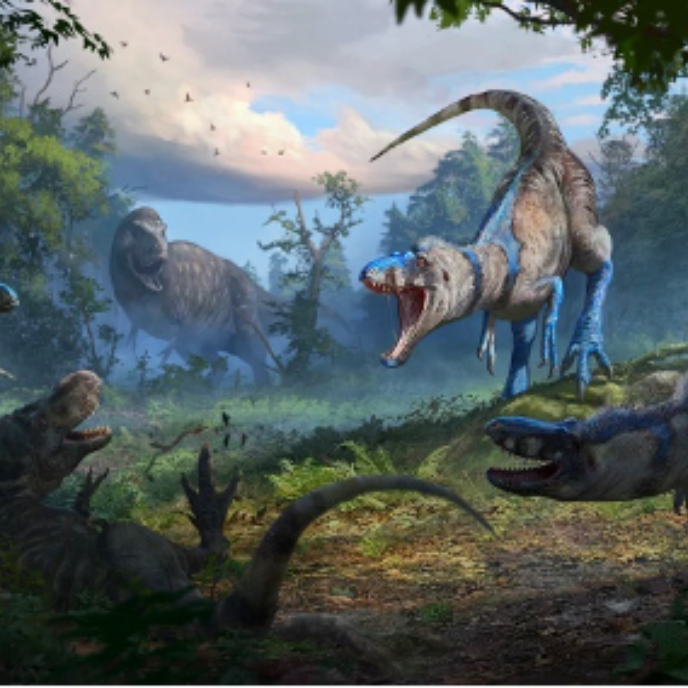
Image credit: A. Hutchings and Zanno and Napoli (2025)
Spikey Boi
Spicomellus (pronounced spike-oh-mel-us) might just be the weirdest looking dinosaur of all time. This dinosaur was named a few years ago—but it was just one bone that had odd, ‘ice cream cone’-like armored spikes attached to the bone. An expedition went back to where this dinosaur had been found in Morocco and subsequently found more of the skeleton. This entire dinosaur was covered in spikes—spikes all over the body, big ones over the hips, and nearly 3-foot-long spikes around its neck! This dinosaur looks like it belongs in a Godzilla movie!
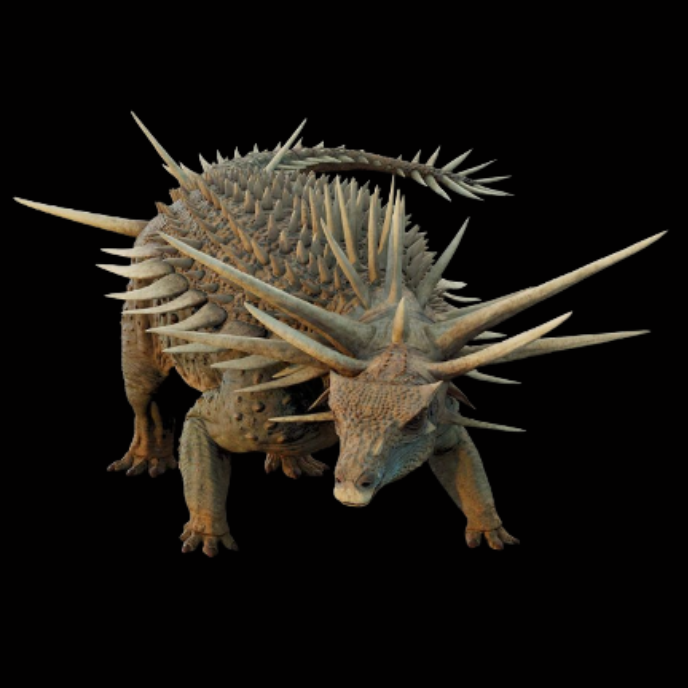
Image credit M. Dempsey and Maidment et al. (2025)
Time Capsule Eggs
It’s very challenging to determine how many millions of years old a dinosaur fossil is, and to do so, we rely on a special mineral called zircon that’s common in volcanic ash. But no ash, no zircon, no age. However, paleontologists now hypothesize that we can use dinosaur eggs. Other radioactive isotopes in the eggshell itself seem to be datable in the exact same way; so even a tiny, broken fragment of fossil eggshell (which is fairly common in some places) could finally allow us to calculate how old these deposits were when volcanic ash isn’t present.
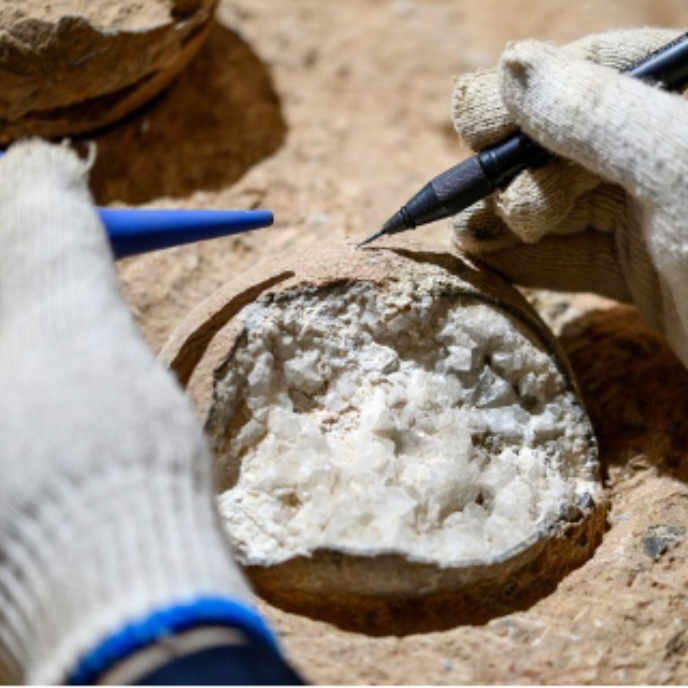
Image credit: B. Zhao(2025)
These were just a few of the many wonderful, exciting, and strange paleontological discoveries of 2025. But what’s in store for 2026? New paleontological discoveries this year are already coming out, and I can’t wait to see all of the new and exciting science that will happen in 2026!