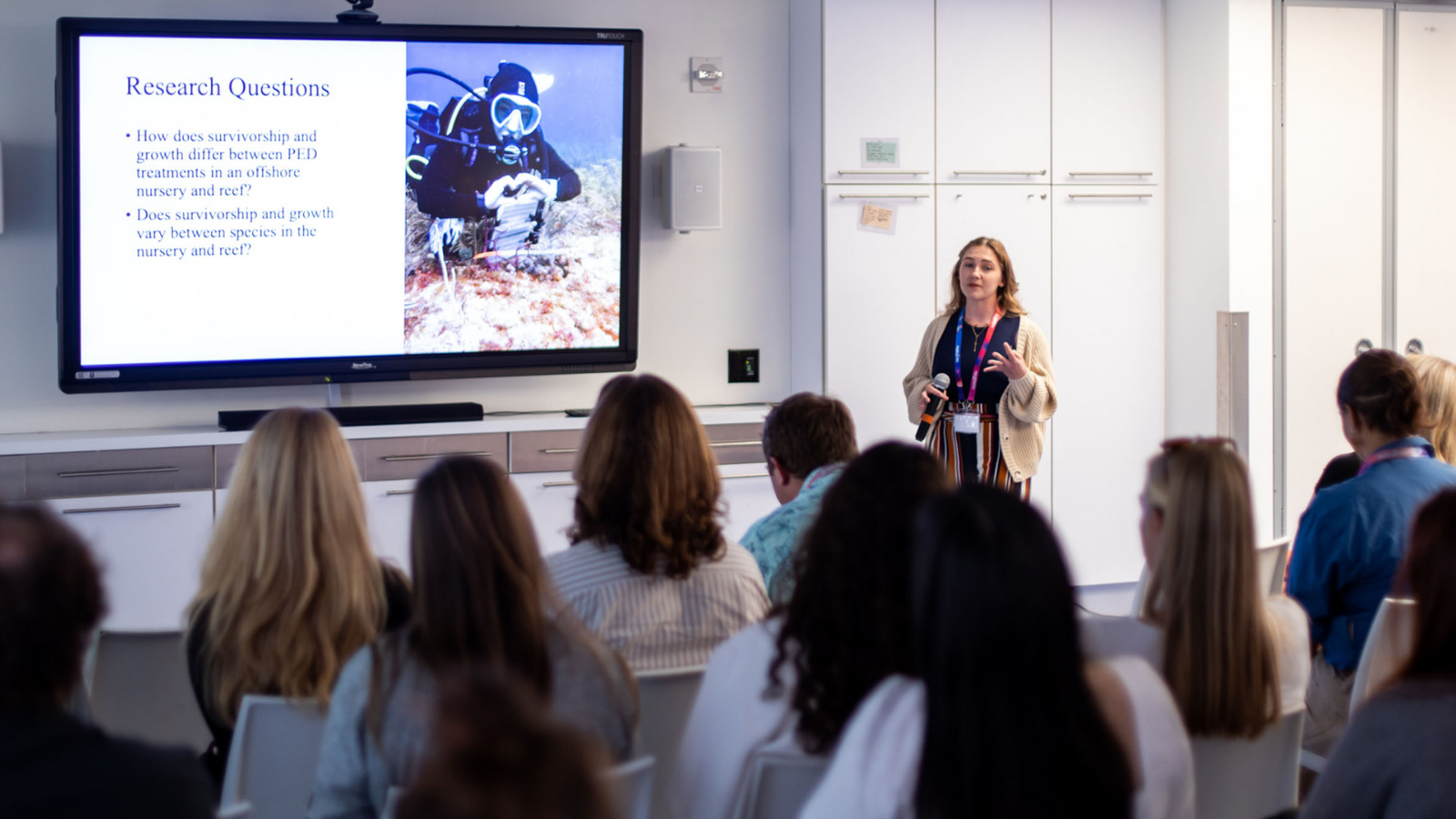
In November, the Phillip and Patricia Frost Museum of Science organized and hosted the third annual ReeFLorida Symposium. Building on the success of the first two years, the gathering took place from November 18 – 21 and continued the momentum of collaboration and innovation for a healthy Florida’s Coral Reef.
This year’s event offered a packed program of plenary talks, short presentations, poster sessions, and hands-on workshops, giving attendees multiple ways to exchange knowledge, share new data, and make new connections. Senior Director of Conservation Shannon Jones dubbed this year the best one yet saying, “This year’s Symposium brought together a record number of researchers, conservationists, and educators whose passion and collaboration continue to elevate this event each year.”
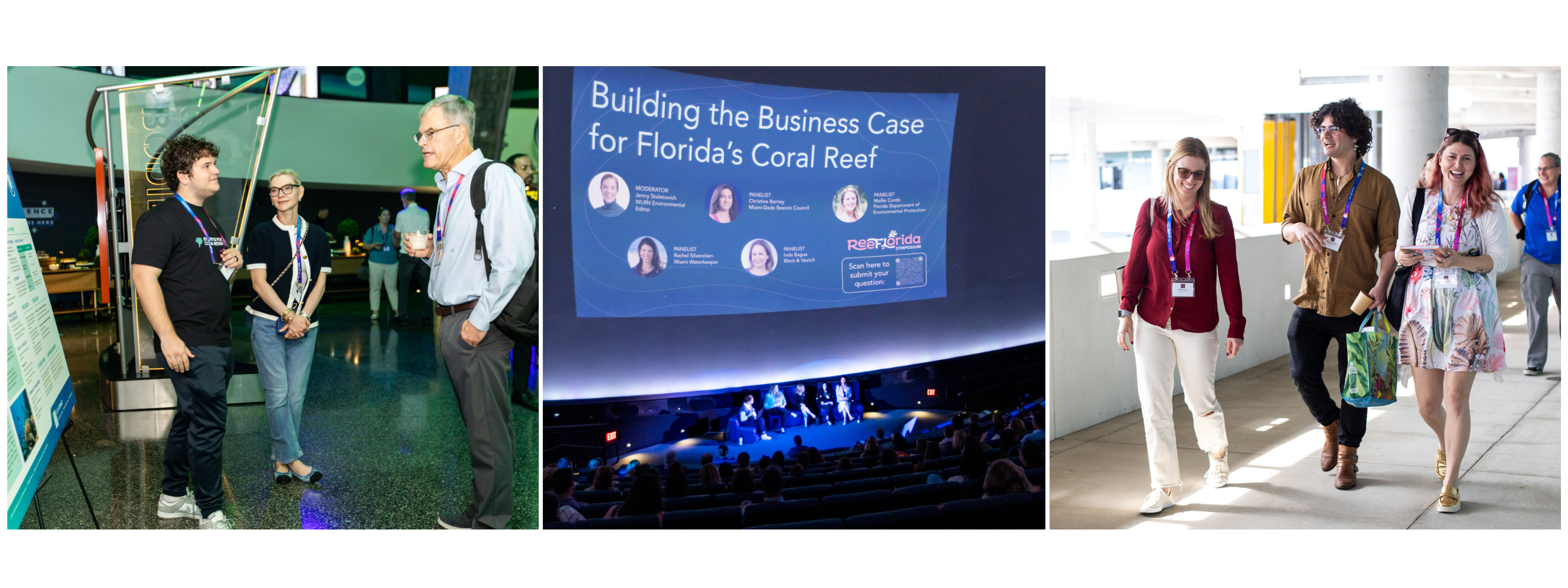 In total, over 230 researchers, conservation practitioners, educators, students, and resource managers committed to the future of the Florida Coral Reef gathered for 80 presentations, 20 posters, four workshops, three plenaries, two roundtable discussions, and one panel.
Attendees heard from plenary speakers, including Alex Reed, director of the Office of Resilience and Coastal Protection at the Florida Department of Environmental Protection; Ken Nedimeyer, technical director at Reef Renewal USA; and Dr. Analisa Duran, vice president of Knight Science Education at Frost Science. Each shared their perspective on one of the three core themes of the ReeFLorida Symposium: research, conservation, and education. Guests also got a first look at the trailer for an up-and-coming documentary Reef Keepers, which focuses on the incredible work of several restoration practitioners working on Florida’s Coral Reef.
Frost Science staff showcased their work in coral care and preservation. Aquarists Natalia Hidalgo and Andrea Lovell discussed protocols developed for the treatment of ciliate infections (a type of parasitic disease) in staghorn coral, as well as the care and health of the pillar coral gene bank at the museum. Natalia, who oversees pillar coral care, expressed that “it was wonderful to be able to exchange knowledge with people who are as obsessed with corals as we are.” It was her first time presenting at the Symposium, and she was excited to be able to talk more about the pillar corals, highlighting that “this species is still a bit underrepresented in the coral conservation sphere, so I thought it would be helpful for the community as a whole to shed some light on how to succeed with this sensitive but very special species.”
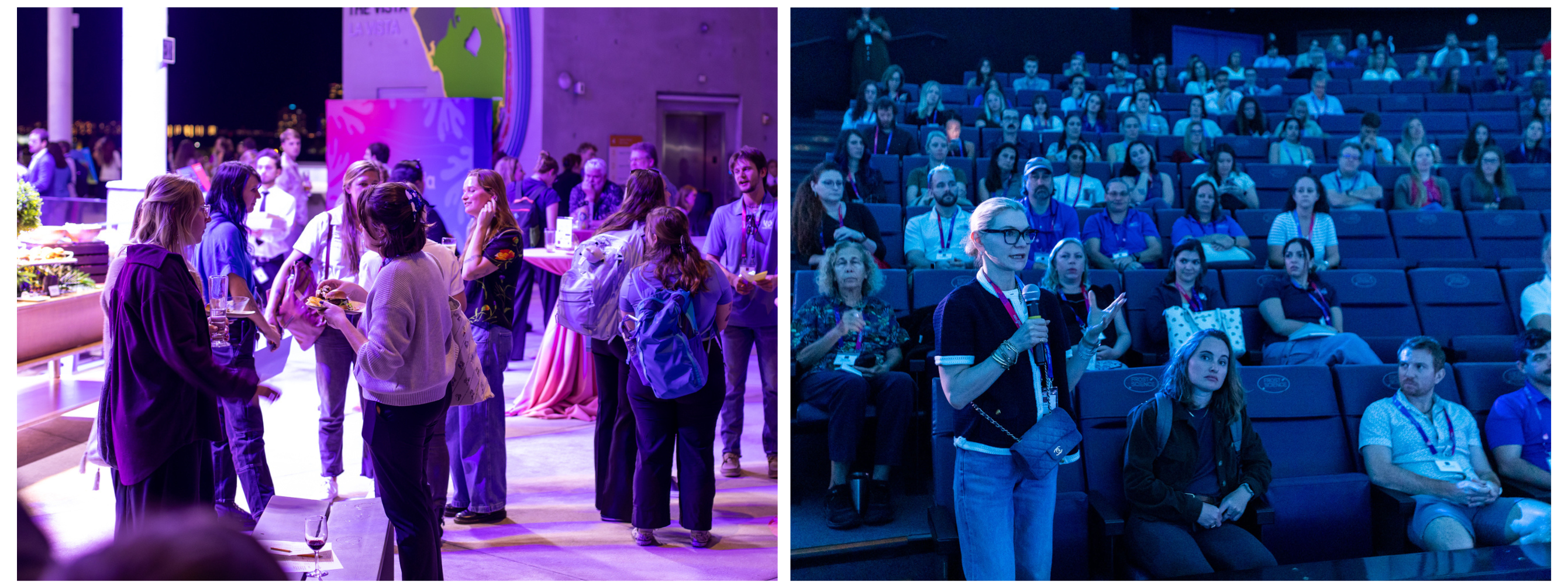
Other presentations spanned across all sectors of reef-related research and conservation, including herbivore cultivation, coral predation and preventative measures, land-based coral husbandry and nursery systems, and public education and outreach techniques. Roundtable discussions, a new addition to the Symposium’s schedule, focused on key topics such as scaling up restoration efforts and identifying gaps in social science research related to reefs. The addition of these roundtables allowed attendees to directly participate in the discussion and hear about the experiences of fellow reef experts from varying sectors.
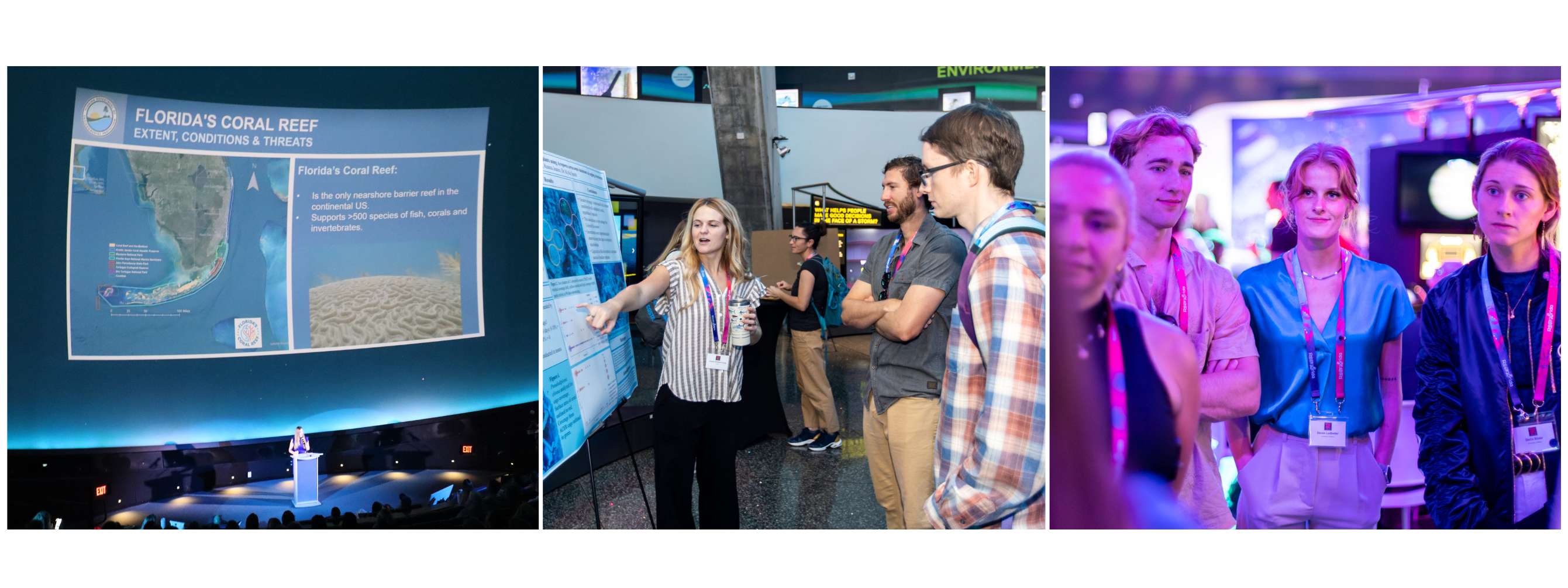
Like previous years, the event demonstrated that Florida’s Coral Reef is not just a scientific priority, but a shared responsibility. Thanks to the collective energy and dedication of this growing community, the path forward is filled with hope. Although the 2025 ReeFLorida Symposium has concluded, it is our hope that this event will continue to gather and inspire those invested in the health of Florida’s Coral Reef for years to come.
Science Story Contributor: Caitlynne Johnson
Watch the 2025 ReeFlorida Symposium Video