
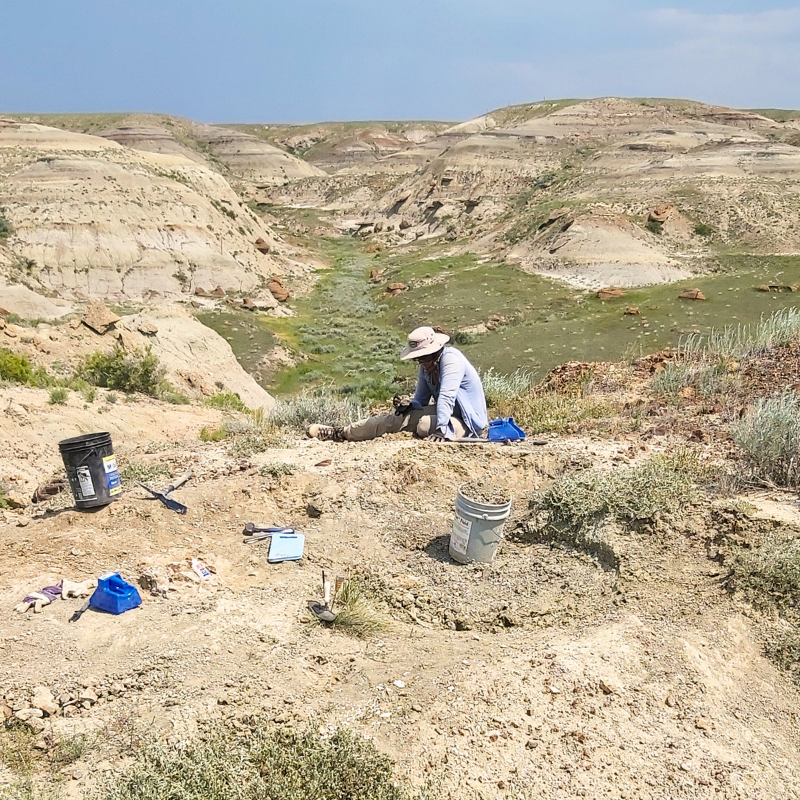
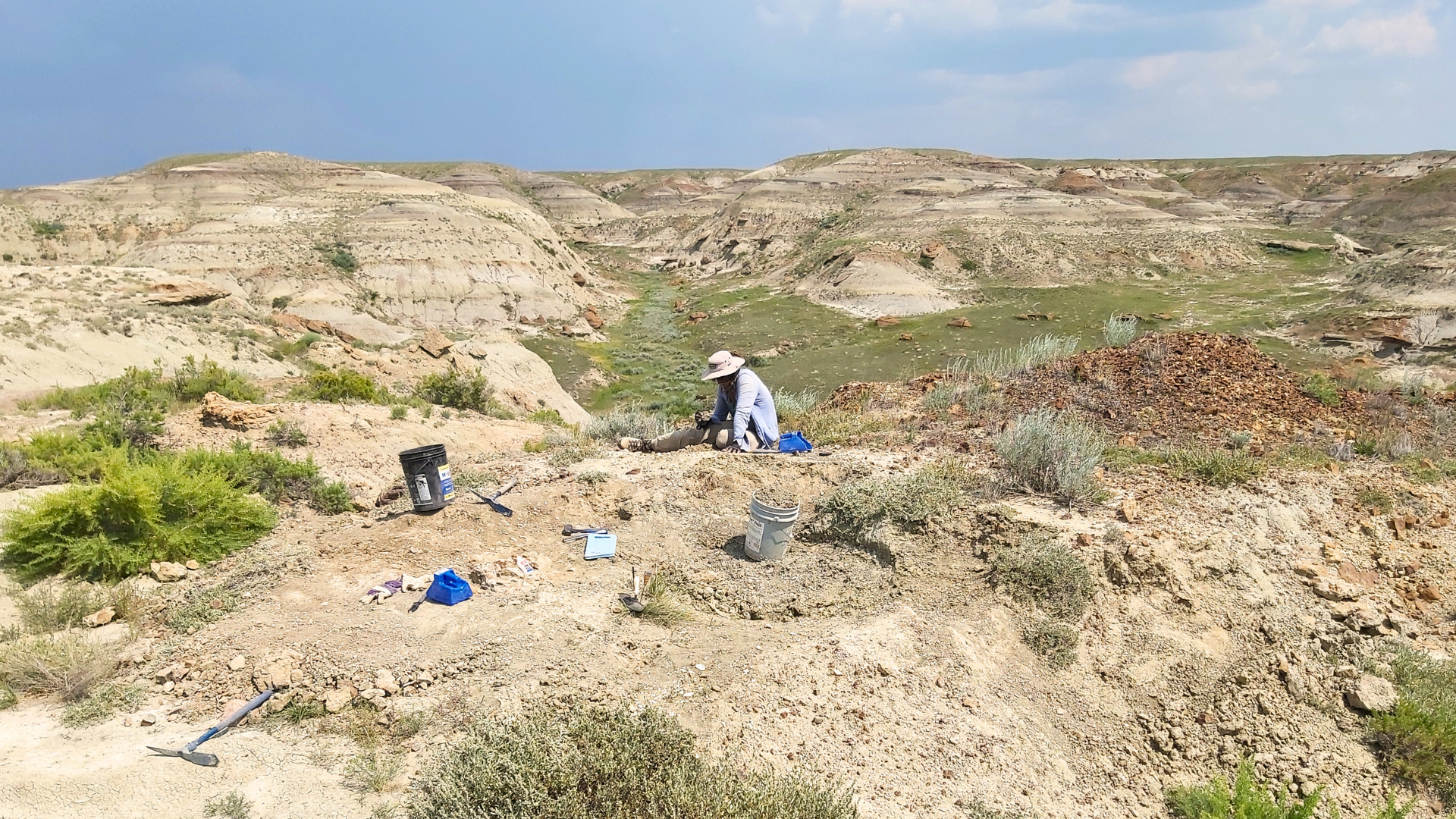
Join us in Montana and experience hands-on fieldwork with our paleontologists! Click here for more details.
Week 2: July 5 – 11
Use real tools, gain valuable skills, and be a part of scientific discovery, excavating dinosaur fossils alongside expert paleontologists during this week-long experience in Havre, Montana.
Registration is Full
This week has reached capacity.
Digging Expedition Information
- Participation in hands-on field work with paleontologists
- Personal dig-kit, includes your own set of tools
- Breakfast, lunch and dinner for 6 days
- Hotel stay for 6 nights
- Transportation from the airport to hotel*
- Transportation to and from the dig site every day
*Flights to Great Falls, Montana, are not included. Transportation from Great Falls International Airport to Havre, Montana, is included.
Hotel stays are included in the cost of your program at Best Western Plus Havre Inn & Suites. The Best Western Plus serves a continental breakfast every morning, so make sure to fuel up before heading into the field for the day.
Sunday
Arrive in Great Falls, Montana and get transported to Havre (2 hours) by our Digging Expedition Coordinator. Please connect with our Digging Expedition Coordinator before booking flights.
Digging expedition orientation will be at 5:00 p.m. followed by a group dinner in town.
Monday – Friday
Digging Days 1-5: Get into the digging routine with us!
7:00 a.m.: Breakfast at the hotel
8:00 a.m.: Depart for the dig site (30-minute drive)
9:00 a.m. – 12:00 p.m.: Begin excavation
12:00 p.m.: Lunch (provided)
12:30 p.m.: Continue excavation
5:00 p.m.: Drive back to town and relax at the hotel
7:00 p.m.: Dinner (provided)
Saturday
Schedule your flight to leave from Great Falls, Montana. Please connect with our Digging Expedition Coordinator before booking flights. Transportation will be provided to the airport.
Arrive in Great Falls, Montana and get transported to Havre (2 hours) by our Digging Expedition Coordinator. Please connect with our Digging Expedition Coordinator before booking flights.
Digging expedition orientation will be at 5:00 p.m. followed by a group dinner in town.
Monday – Friday
Digging Days 1-5: Get into the digging routine with us!
7:00 a.m.: Breakfast at the hotel
8:00 a.m.: Depart for the dig site (30-minute drive)
9:00 a.m. – 12:00 p.m.: Begin excavation
12:00 p.m.: Lunch (provided)
12:30 p.m.: Continue excavation
5:00 p.m.: Drive back to town and relax at the hotel
7:00 p.m.: Dinner (provided)
Saturday
Schedule your flight to leave from Great Falls, Montana. Please connect with our Digging Expedition Coordinator before booking flights. Transportation will be provided to the airport.
Is there water at the dig site?
There is no running water.
Are there bathrooms at the dig site?
No. While in the field, we do have an outhouse in camp, which is about a 10-15 minute walk each way from the site. In camp, we do have a foot pump-powered sink.
What do I do if I wear contact lenses?
For those with contact lenses, we advise switching to glasses during the field season. When working in the dirt with constant wind, you may get something in your eyes.
What do I wear each day at the dig site?
All participants must wear closed-toed shoes. Sneakers, tennis shoes, hiking boots, etc. are fine, but crocs, flip-flops, sandals, etc. are not allowed. If you bring inappropriate footwear, you will not be permitted to dig until you have suitable attire. A hat of any variety is strongly recommended. We recommend something with a wide brim. Likewise, apply sunscreen throughout the day.
Recommended attire:
What is the weather like at the dig site?
Late summer temperatures will get above 100° F (38° C), but we have a shade tarp set up over the dig site. We will be at a high elevation (thousands of feet/meters above sea-level), so you will become dehydrated even if you’re not sweating. But that’s what the big water jug we provide is for! Montana can get violent late afternoon thunderstorms, so if a storm is coming, we have to head back to town. And if it rains overnight, we may not be able to get to the site that day – but just in case, we have rainy day plans.
I am registering my child (14-17 years old) do I need to pay full price for myself?
Yes, you will be considered a participant as well and will need to register for yourself.
What if we don’t find anything when digging?
Our team has been digging at this site in previous years and have found dinosaur bones. This being said, we cannot guarantee that there will be new findings every year.
There is no running water.
Are there bathrooms at the dig site?
No. While in the field, we do have an outhouse in camp, which is about a 10-15 minute walk each way from the site. In camp, we do have a foot pump-powered sink.
What do I do if I wear contact lenses?
For those with contact lenses, we advise switching to glasses during the field season. When working in the dirt with constant wind, you may get something in your eyes.
What do I wear each day at the dig site?
All participants must wear closed-toed shoes. Sneakers, tennis shoes, hiking boots, etc. are fine, but crocs, flip-flops, sandals, etc. are not allowed. If you bring inappropriate footwear, you will not be permitted to dig until you have suitable attire. A hat of any variety is strongly recommended. We recommend something with a wide brim. Likewise, apply sunscreen throughout the day.
Recommended attire:
- T-shirt
- Long hiking pants
- Close-toed shoes
- Baseball cap or wide brimmed hat
- We recommend bringing a jacket in case it gets cool
What is the weather like at the dig site?
Late summer temperatures will get above 100° F (38° C), but we have a shade tarp set up over the dig site. We will be at a high elevation (thousands of feet/meters above sea-level), so you will become dehydrated even if you’re not sweating. But that’s what the big water jug we provide is for! Montana can get violent late afternoon thunderstorms, so if a storm is coming, we have to head back to town. And if it rains overnight, we may not be able to get to the site that day – but just in case, we have rainy day plans.
I am registering my child (14-17 years old) do I need to pay full price for myself?
Yes, you will be considered a participant as well and will need to register for yourself.
What if we don’t find anything when digging?
Our team has been digging at this site in previous years and have found dinosaur bones. This being said, we cannot guarantee that there will be new findings every year.